
Testing laboratory and consultancy · Granges-Paccot

Book a call

Regulations (EU) 2017/745 and 2017/746 · MepV

CE marking of medical devices

Medical electrical equipment, software, in vitro diagnostic instruments, Annex XVI aesthetic products: Säfeli supports you along the whole regulatory pathway. Electrical safety and EMC testing, biocompatibility, risk management, ISO 13485 quality management system, technical documentation, regulatory affairs and Swiss authorised representative: a single partner, from design to placing on the market.

Regulations (EU) 2017/745 and 2017/746
MDR · IVDR
Safety of medical electrical equipment
IEC 60601-1
Quality management system
ISO 13485
Swiss authorised representative
CH-REP

Who it is for

You develop or distribute medical devices

  • Medtech start-ups

    A first device: regulatory strategy from the design stage, classification, development plan, realistic budget and timeline.

  • Medical electrical equipment

    IEC 60601-1 electrical safety, EMC, usability, embedded software and alarms.

  • Medical device software

    Qualification and classification, IEC 62304 life cycle, cybersecurity and documentation.

  • Foreign manufacturers

    Access to the Swiss market: CH-REP authorised representative, labelling and importer obligations.

The full range

One partner for your entire file

Regulatory, testing, biocompatibility, quality: we cover every building block of your device’s CE marking and coordinate the whole for you.

Regulatory affairs consultant and engineers from a medtech start-up reviewing technical documentation
Regulatory affairs

Regulatory strategy and technical documentation

Classification, choice of the conformity assessment procedure, general safety and performance requirements, ISO 14971 risk management, technical documentation and post-market surveillance: we build your MDR or IVDR file and prepare your exchanges with the notified body.

What you receive

  • Classification and regulatory strategy
  • Technical documentation according to Annexes II and III
  • ISO 14971 risk management file
  • Preparation for the notified body audit

References

  • Regulation (EU) 2017/745
  • EN ISO 14971:2019/A11:2021
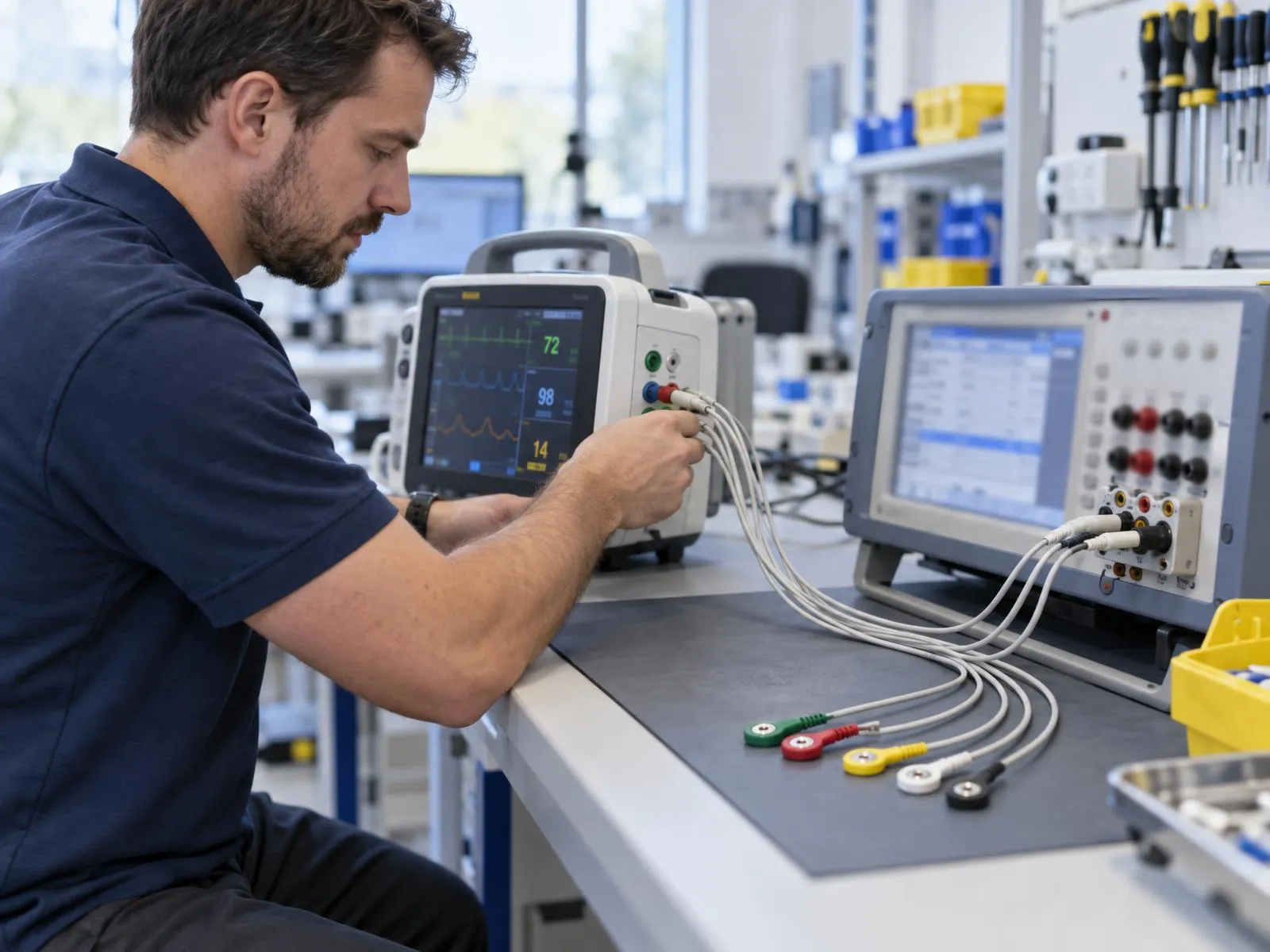
Engineer connecting the patient leads of a monitoring device to an electrical safety analyser
Electrical safety

IEC 60601-1 electrical safety testing

Patient leakage and touch currents, dielectric strength, heating, single fault conditions, essential performance: we carry out the tests to IEC 60601-1, its collateral standards and the particular standard for your device, and write the report.

What you receive

  • IEC 60601-1 and collateral standards test plan
  • Test report
  • Link with the risk management file

References

  • IEC 60601-1 ed. 3.2*
  • IEC 60601-1-6*
  • IEC 60601-1-11*
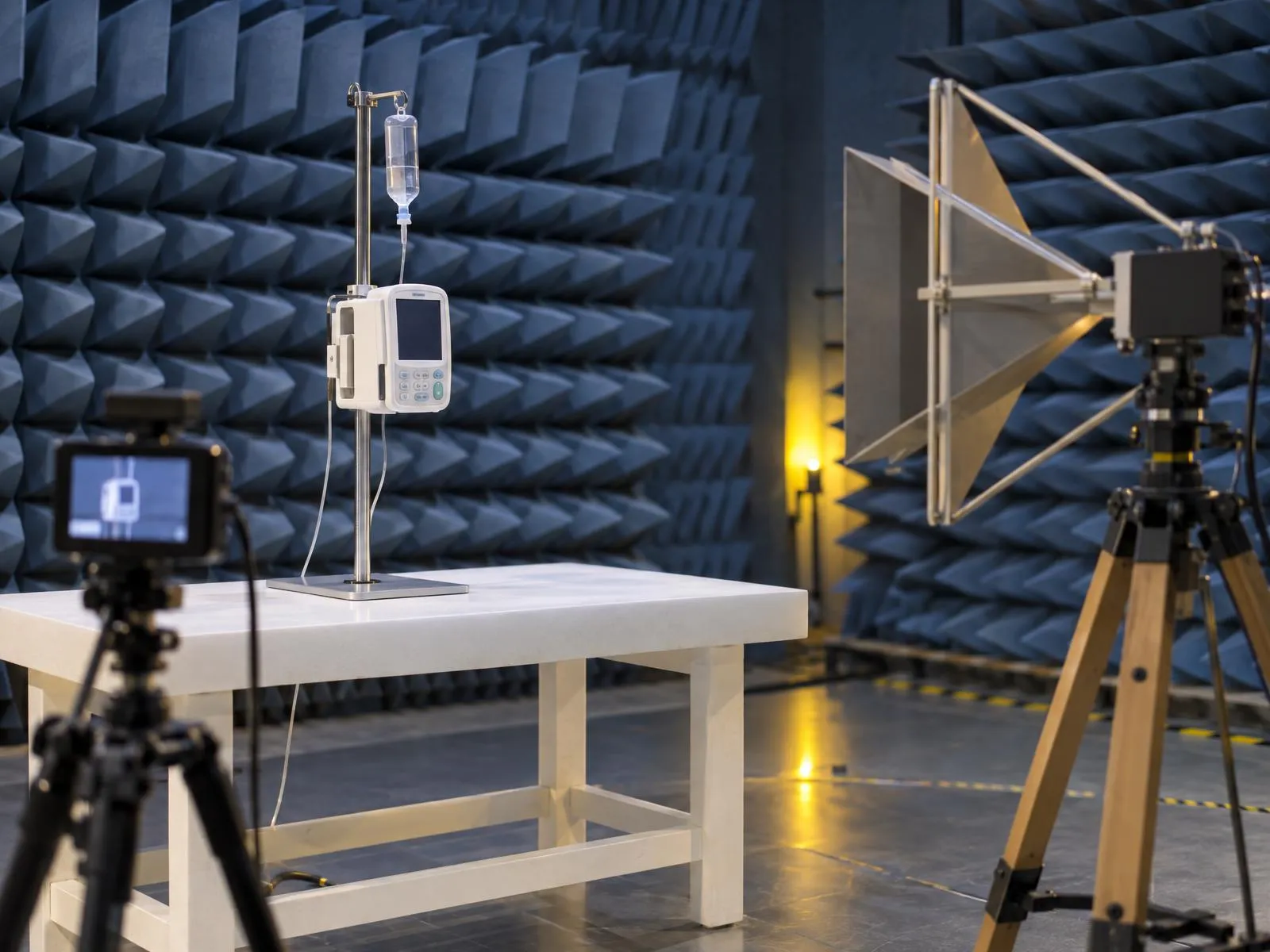
Infusion pump undergoing a radiated immunity test in an anechoic chamber
EMC

IEC 60601-1-2 EMC testing

Emissions and immunity according to the environment of use, professional healthcare facility or home, with monitoring of essential performance during the tests: we define the test plan, carry out the tests and provide the EMC information for the instructions for use.

What you receive

  • EMC test plan for the intended environment
  • EMC test reports
  • EMC information for the instructions for use

References

  • IEC 60601-1-2*
  • EN 61326-2-6* (IVD)
Scientist placing samples of silicone tubing into extraction vials
Biocompatibility

Biological evaluation and biocompatibility

Nature and duration of contact with the body, chemical characterisation of materials, choice of tests (cytotoxicity, sensitisation, irritation, etc.): we draw up the biological evaluation plan, organise the necessary tests and write the biological evaluation report.

What you receive

  • ISO 10993-1 biological evaluation plan
  • Biocompatibility test programme and follow-up
  • Biological evaluation report

References

  • ISO 10993-1*
  • EN ISO 10993-18:2020/A1:2023
  • EN ISO 10993-23:2021

Also

Regulation (EU) 2017/745

The MDR in six points

The Medical Device Regulation has applied since 26 May 2021. Its transition period was extended in 2023, and on 16 December 2025 the Commission proposed a targeted revision of the MDR and the IVDR: we follow its progress for you.

  1. 26.05.2021Regulation (EU) 2017/745 applies
  2. 26.05.2024MDR quality management system and application to a notified body, a condition of the transition
  3. 2027 · 2028End of the transition on 31 December, depending on the class
  • Class I

    The manufacturer declares conformity itself, after drawing up the technical documentation. Exceptions: sterile devices, devices with a measuring function and reusable surgical instruments.

    MDR, Art. 52(7)
  • Classes IIa, IIb and III

    Conformity assessment involves a notified body, with requirements that increase with the class.

    MDR, Art. 52 and Annexes IX to XI
  • Classification rules

    The class depends on the duration of use, invasiveness, the part of the body concerned and whether the device is active. Software has its own rule.

    MDR, Art. 51 and Annex VIII
  • Person responsible for regulatory compliance

    Mandatory for every manufacturer. Micro and small enterprises may use an external person, permanently and continuously available.

    MDR, Art. 15
  • Quality management system

    Every manufacturer establishes and maintains a quality management system proportionate to the risk class and type of device. EN ISO 13485 is the reference standard.

    MDR, Art. 10(9)
  • Products without a medical purpose

    Contact lenses, liposuction equipment, aesthetic lasers and intense pulsed light: certain Annex XVI products also fall under the MDR.

    MDR, Annex XVI

Sources: Regulation (EU) 2017/745; Regulation (EU) 2023/607; European Commission, COM(2025) 1023 of 16.12.2025.

Software and cybersecurity

Medical device software and cybersecurity

Software can be a medical device in its own right, with its own classification rule. Its life cycle follows IEC 62304, and its cybersecurity IEC 81001-5-1 and the MDCG 2019-16 guidance. Medical devices remain subject to the MDR for cybersecurity: the Cyber Resilience Act does not apply to them.

Sources: Regulation (EU) 2017/745, Annex VIII; EN 62304:2006/A1:2015; IEC 81001-5-1:2021; MDCG 2019-16; Regulation (EU) 2024/2847, Art. 2

Standards

Key standards for medical devices

Quality management, risk management, electrical safety, software, biocompatibility, labelling: every device combines several standards. The regulatory plan sets those that apply to yours.

AreaStandardScope
QualityEN ISO 13485:2016/A11:2021Quality management systems for medical devices
RiskEN ISO 14971:2019/A11:2021Application of risk management to medical devices
ElectricalIEC 60601-1 ed. 3.2*Medical electrical equipment: basic safety and essential performance
ElectricalIEC 60601-1-2*Electromagnetic compatibility of medical electrical equipment
ElectricalIEC 60601-1-6*Usability of medical electrical equipment
ElectricalIEC 60601-1-11*Medical electrical equipment used in the home healthcare environment
UsabilityEN 62366-1:2015/A1:2020Application of usability engineering
SoftwareEN 62304:2006/A1:2015Software life cycle processes
CyberIEC 81001-5-1:2021Security of health software throughout its life cycle
BiologyISO 10993-1*Biological evaluation within a risk management process
BiologyEN ISO 10993-18:2020/A1:2023Chemical characterisation of materials
BiologyEN ISO 10993-23:2021Tests for irritation
LabellingEN ISO 15223-1:2021Symbols to be used with information to be supplied by the manufacturer
LabellingISO 20417*Information to be supplied by the manufacturer
ClinicalISO 14155*Clinical investigation of medical devices
IVDIEC 61010-2-101*In vitro diagnostic equipment

* Edition to be checked for your project. Not all the standards listed are harmonised under the MDR: only those whose reference is published in the Official Journal of the EU give a presumption of conformity, within the limits it sets. The others remain the state of the art expected by notified bodies.

Swiss market

Selling a medical device in Switzerland

Since 2021, Switzerland has had its own obligations for foreign manufacturers, authorised representatives and importers.

  • Swiss authorised representative (CH-REP)

    A manufacturer with no registered office in Switzerland may only place its devices on the Swiss market after appointing, in writing, an authorised representative domiciled in Switzerland.

    MepV, Art. 51
  • Permanent regulatory expertise

    The authorised representative must have permanent and continuous access to a person with the required expertise in the requirements for medical devices.

    MepV, Art. 52
  • Importer

    Before placing a device on the market, the importer checks in particular the conformity marking, the declaration of conformity and the appointment of the authorised representative.

    MepV, Art. 53

Our approach

Your medical device in four steps

  1. Discovery call

    Your device, its intended purpose, your markets and your timeline. 30 minutes.

  2. Regulatory strategy

    Qualification, classification, procedure, standards, tests, budget and schedule.

  3. Development and testing

    Risk management, electrical safety, EMC, biocompatibility, usability.

  4. File and market

    Technical documentation, quality management system, audit, EU declaration and placing on the market.

Swiss market

Medical devices in Switzerland

In Switzerland, the Swiss Medical Devices Ordinance (MepV) and the Swiss Ordinance on In Vitro Diagnostic Medical Devices (IvDV) take over the requirements of the MDR and the IVDR. Since 26 May 2021, a manufacturer with no registered office in Switzerland must appoint a Swiss authorised representative; conversely, a Swiss manufacturer must appoint an authorised representative in the EU.

Säfeli can act as your Swiss authorised representative (CH-REP), with the qualified person required by the ordinance, and check your obligations as an importer or distributor.

Sources: MepV, SR 812.213, Art. 51 to 53 (as at 1 July 2026); IvDV (Fedlex).

Frequently asked questions

Frequently asked questions on medical devices

Does your device raise a specific question? Ask an engineer directly.

Book a call
Is my product a medical device?

It is the intended purpose you give it that decides: diagnosis, prevention, monitoring, prediction, prognosis, treatment or alleviation of a disease, injury or disability, among others. The same device may or may not be a medical device depending on what its instructions, label and advertising claim. Certain products without a medical purpose, listed in Annex XVI, also fall under the MDR.

Sources: Regulation (EU) 2017/745, Art. 2(1) and Annex XVI

Does a class I device need a notified body?

No. The manufacturer declares conformity itself after drawing up the technical documentation, and signs the EU declaration of conformity. A notified body is only involved for certain aspects of class I devices that are sterile, have a measuring function or are reusable surgical instruments.

Sources: Regulation (EU) 2017/745, Art. 52(7)

Have the MDR transition periods been extended?

Yes. Regulation (EU) 2023/607 extended the transition period to 31 December 2027 or 31 December 2028 depending on the device class, provided in particular that a quality management system compliant with the MDR is in place and that an application was lodged with a notified body by 26 May 2024.

Sources: Regulation (EU) 2023/607; European Commission, MDCG 2021-25

Which edition of IEC 60601-1 should I apply?

Edition 3.2, i.e. IEC 60601-1:2005 with its amendments 1 (2012) and 2 (2020), together with the collateral standards (EMC, usability, home healthcare) and the particular standard (part 2) for your device, if there is one. The harmonised status of each edition under the MDR is checked in the Official Journal.

Sources: IEC 60601-1; list of harmonised standards under Regulation (EU) 2017/745

Is biocompatibility testing required?

Not always. ISO 10993-1 requires biological risks to be evaluated according to the nature and duration of contact with the body, as part of risk management. Existing data and the chemical characterisation of materials often make it possible to limit testing to what is really necessary.

Sources: ISO 10993-1; EN ISO 10993-18:2020/A1:2023

Do I need an ISO 13485 quality management system?

The MDR requires every manufacturer to have a quality management system proportionate to the risk class and type of device. ISO 13485 is not mandatory in itself, but it is the harmonised standard used to demonstrate this, and notified bodies refer to it. We help you set it up and audit it.

Sources: Regulation (EU) 2017/745, Art. 10(9); EN ISO 13485:2016/A11:2021

What is a Swiss authorised representative (CH-REP)?

It is the person domiciled in Switzerland whom any manufacturer without a registered office in Switzerland must appoint in writing before placing its devices on the Swiss market. The representative handles the formal and safety-related matters of placing on the market and must have permanent access to a qualified person. Säfeli can take on this role for your company.

Sources: MepV, SR 812.213, Art. 51 and 52

Can software be a medical device?

Yes, if it has a medical purpose, for example providing information used to take diagnostic or therapeutic decisions. It has its own classification rule. Its life cycle follows IEC 62304, and its cybersecurity IEC 81001-5-1 and the MDCG 2019-16 guidance.

Sources: Regulation (EU) 2017/745, Annex VIII; EN 62304:2006/A1:2015; IEC 81001-5-1:2021; MDCG 2019-16

Book a call

Tell us about your medical device

Book a 30-minute slot with an engineer directly. No back-and-forth by email: you choose the time, we prepare the call.

Choose a time slot

Contact details

Address
Säfeli Sàrl
Route d'Englisberg 3
1763 Granges-Paccot
Languages
French, German, English
Book a call