Testing laboratory and consultancy · Granges-Paccot

Book a call

IEC/EN 61010-1 · Low Voltage Directive 2014/35/EU

CE marking of laboratory equipment

Analysers, automated systems, measuring instruments, laboratory power supplies: their CE marking relies on electrical safety to IEC/EN 61010-1, electromagnetic compatibility to EN 61326-1 and the RoHS Directive. Säfeli reviews your design, carries out the tests and compiles the technical file, through to the EU declaration of conformity that you sign.

Reference safety standard
IEC 61010-1
EMC of laboratory equipment
EN 61326-1
Usual overvoltage category and pollution degree
OVC II · PD 2
Internal production control
Module A

Who it is for

You design measurement, control or laboratory equipment

  • Manufacturers of analytical instruments

    Analysers, readers, thermal cyclers, in vitro diagnostic instruments: electrical safety, temperature rise, fluids and the requirements specific to your application.

  • Manufacturers of measuring and test equipment

    Multimeters, probes, laboratory power supplies, generators: measurement categories, measuring circuits and accessories.

  • Laboratory automation

    Pipetting robots, sample handlers, automated systems: IEC 61010-2-081 and, depending on the moving parts, the Machinery Regulation.

  • Start-ups and spin-offs

    From prototype to the first unit sold: we build the requirements in from the design stage so you do not have to redo a circuit board or an enclosure.

Our services

CE conformity of your equipment, from design to technical file

Design review, safety tests, temperature rise and documentation: each step is carried out by the engineers who follow your project.

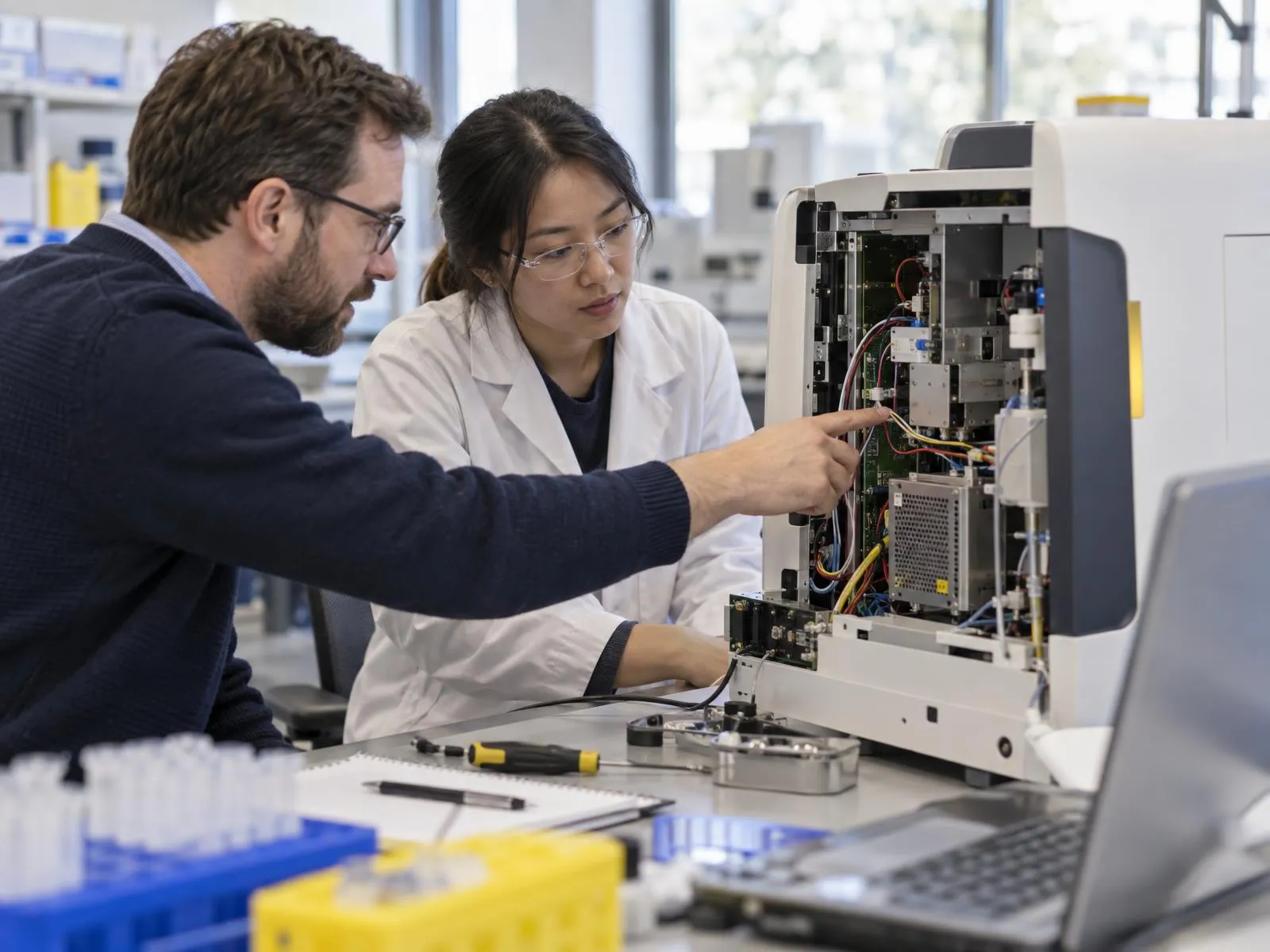
Two engineers examining the inside of an open laboratory analyser
Design review

IEC 61010-1 design review

Before the first prototype, we analyse your diagrams, your bill of materials and your critical components: insulation, clearances and creepage distances, fire protection, choice of power supply. A deviation is easier to correct on a diagram than on a manufactured enclosure.

What you receive

  • Review report with deviations ranked by priority
  • Insulation diagram of the equipment
  • List of critical components to document

References

  • IEC 61010-1:2010+AMD1:2016
  • IEC 60664-1
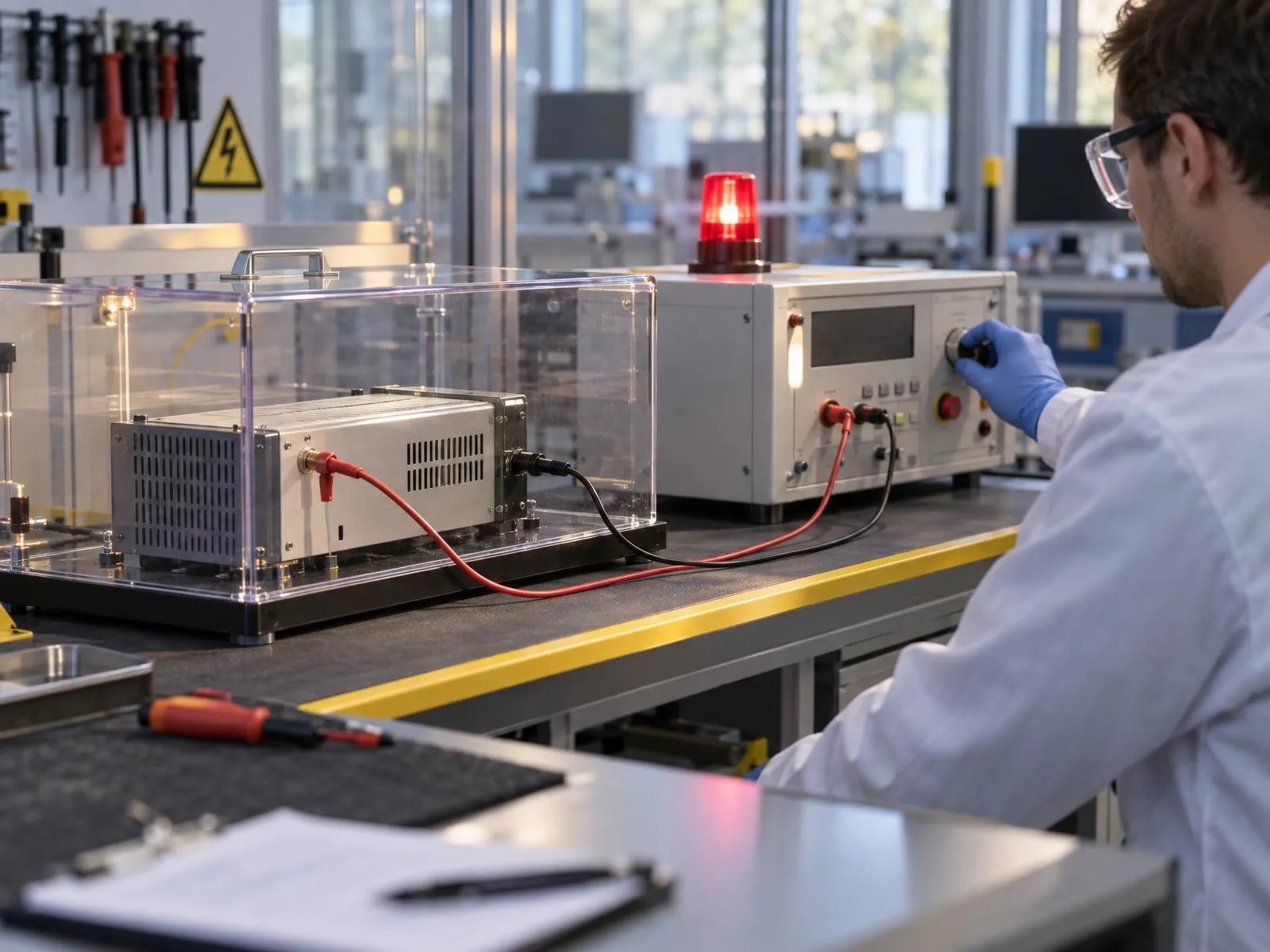
Dielectric strength test on equipment placed under a transparent protective cover
Testing

Electrical safety testing

Dielectric strength, protective earth continuity, touch current, single fault condition tests: we carry out the type tests on your equipment and write the test report to IEC 61010-1 and the applicable Part 2 standards.

What you receive

  • Test plan
  • IEC 61010-1 and Part 2 test report
  • Non-conformities and proposed corrections

References

  • EN 61010-1:2010/A1:2019
  • IEC 61010-1, clauses 4 and 6
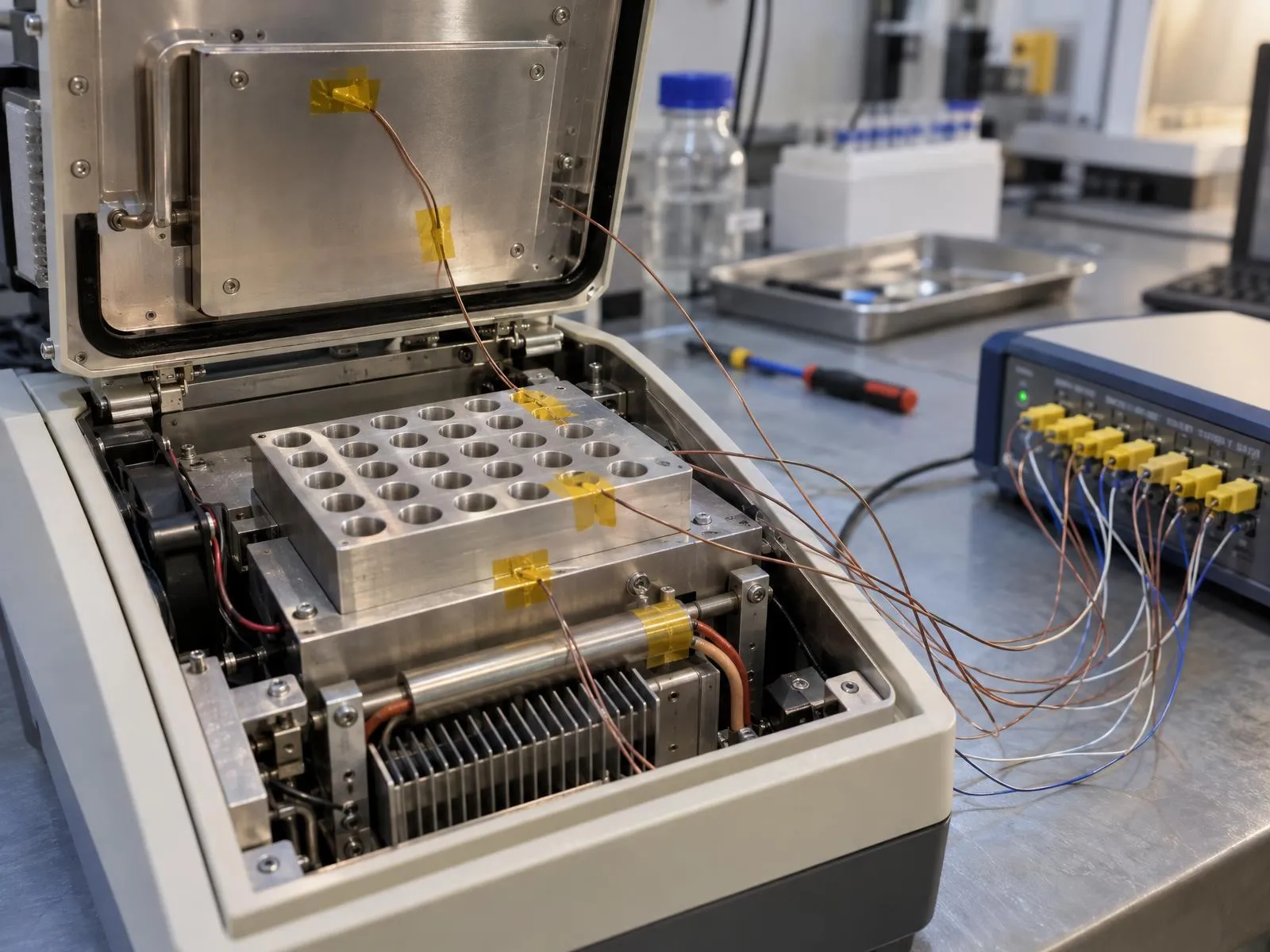
Open laboratory instrument fitted with thermocouples connected to a temperature recorder
Temperature rise, fire, fluids

Temperature rise, fire and fluids

We use thermocouples to measure the temperature of accessible surfaces and components, check protection against the spread of fire and how the equipment behaves with overflow, spillage and cleaning.

What you receive

  • Temperature rise readings in normal operation and under fault
  • Assessment of the enclosure and materials
  • Spillage and cleaning tests

References

  • IEC 61010-1, clauses 9, 10 and 11
  • EN IEC 61010-2-010:2020
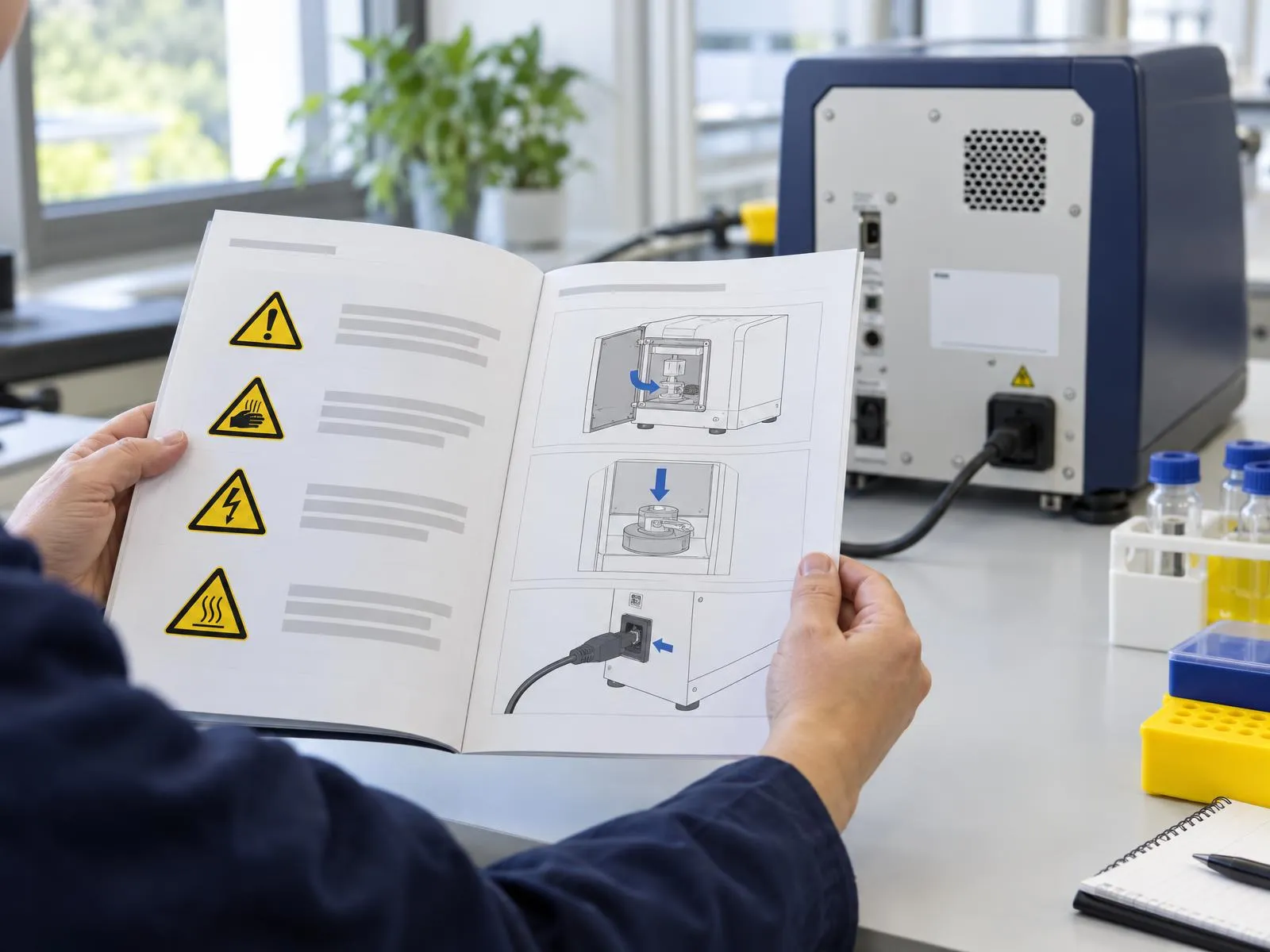
Open instructions for use with safety symbols in front of a laboratory instrument
Technical file

Marking, instructions and technical file

Rating label and symbols, instructions for use, risk assessment, bill of materials and diagrams: we compile the technical file and prepare the EU declaration of conformity that you sign.

What you receive

  • Label content and symbols
  • Review of the instructions for use
  • Risk assessment
  • Technical file and EU declaration of conformity

References

  • IEC 61010-1, clauses 5 and 17
  • Directive 2014/35/EU, Annex III

Also

Applicable legislation

Which directives apply to laboratory equipment?

The Low Voltage Directive, the EMC Directive and the RoHS Directive apply to almost all mains-powered laboratory equipment. Depending on the design, other legislation is added or takes over: we identify it from the first call.

  • Low Voltage 2014/35/EU

    Safety of equipment supplied between 50 and 1000 V AC or between 75 and 1500 V DC. The manufacturer assesses conformity itself (internal production control).

    Directive 2014/35/EU, Article 1 and Annex III
  • Electromagnetic compatibility 2014/30/EU

    The equipment must not disturb its environment and must operate despite disturbances. Reference for laboratory equipment: the EN 61326 series.

    Directive 2014/30/EU, Annex I
  • RoHS 2011/65/EU

    Restriction of lead, mercury, cadmium and the other listed substances. The technical documentation follows EN IEC 63000.

    Directive 2011/65/EU; EN IEC 63000:2018
  • Radio equipment 2014/53/EU

    A Wi-Fi, Bluetooth or cellular module brings the equipment under the Radio Equipment Directive (RED), which then covers electrical safety and EMC, and adds cybersecurity for internet-connected equipment.

    Directive 2014/53/EU, Article 3; Delegated Regulation (EU) 2022/30
  • Machinery Regulation 2023/1230

    A laboratory automation system, a pipetting robot or a motorised stirrer can be a machine. The Machinery Regulation then applies, from 20 January 2027.

    Regulation (EU) 2023/1230, Articles 2 and 3
  • In vitro diagnostics 2017/746

    An in vitro diagnostic instrument falls under the IVDR. IEC 61010-1 and its Part 2-101 are used to demonstrate its electrical safety.

    Regulation (EU) 2017/746; IEC 61010-2-101

Cybersecurity

Connected or software-controlled equipment

Equipment connected to a computer, a network or the cloud contains digital elements within the meaning of the Cyber Resilience Act: reporting of actively exploited vulnerabilities since 11 September 2026, the whole Regulation from 11 December 2027. If it includes a radio and connects to the internet, the cybersecurity requirements of the Radio Equipment Directive (RED) have already applied since 1 August 2025.

Sources: Regulation (EU) 2024/2847, Articles 14 and 71; Delegated Regulation (EU) 2022/30

IEC 61010-1

Key concepts of IEC 61010-1

Six concepts that determine the insulation, the tests and the instructions for your equipment. Best settled at the start of the project.

  • Normal environmental conditions

    Indoor use, altitude up to 2000 m, 5 to 40 °C, relative humidity up to 80 %. Beyond that (outdoors, high altitude, high humidity), the equipment must be designed and specified for extended conditions.

    IEC 61010-1, 1.4.1 and 1.4.2
  • Overvoltage category

    Level of transient overvoltages from the mains. Equipment plugged into a building socket-outlet is generally in category II (OVC II), which sets the insulation distances.

    IEC 61010-1, 1.4.1 f); IEC 60664-1
  • Measurement category

    For circuits that measure an installation (multimeters, clamp meters, probes): CAT II, III or IV depending on proximity to the source. The higher the category, the more demanding the insulation.

    IEC 61010-2-030
  • Pollution degree

    Conductive pollution expected in the environment. Degree 2, the most common case, determines the creepage distances and clearances on your circuit boards.

    IEC 61010-1, 1.4.1 h) and 6.7
  • Single fault condition

    The equipment must remain safe when a protective means or a component fails: short-circuited insulation, blocked fan, failed control. These faults are simulated during testing.

    IEC 61010-1, 4.4
  • Risk assessment

    For hazards that the clauses of the standard do not fully cover, a documented risk assessment complements the tests and forms part of the technical file.

    IEC 61010-1, clause 17

Standards

Standards for laboratory equipment

Part 1 of IEC 61010 sets out the general requirements. The Part 2 standards supplement or modify them for a family of equipment: when a Part 2 applies, it is used together with Part 1.

FieldStandardScope
SafetyEN 61010-1:2010/A1:2019General safety requirements for electrical equipment for measurement, control and laboratory use (IEC 61010-1:2010+AMD1:2016)
SafetyEN IEC 61010-2-010:2020Laboratory equipment for the heating of materials
SafetyIEC 61010-2-020*Laboratory centrifuges
SafetyEN IEC 61010-2-030:2021Testing and measuring circuits, measurement categories
SafetyEN IEC 61010-2-051:2021Laboratory equipment for mixing and stirring
SafetyEN IEC 61010-2-081:2020Automatic and semi-automatic laboratory equipment for analysis and other purposes
SafetyIEC 61010-2-101*In vitro diagnostic (IVD) medical equipment
SafetyIEC 61010-031*Hand-held probe assemblies for electrical measurement and test
EMCEN 61326-1*EMC of electrical equipment for measurement, control and laboratory use: general requirements
EMCEN 61326-2-6*EMC of in vitro diagnostic medical equipment
EMCEN 55011*Emissions from industrial, scientific and medical equipment
RoHSEN IEC 63000:2018Technical documentation for the assessment of hazardous substances
LaserIEC 60825-1*Safety of laser products

* Edition to be checked for your project. Standards remain voluntary; applying a harmonised standard whose reference is published in the Official Journal of the EU gives a presumption of conformity with the requirements it covers (Directive 2014/35/EU, Article 12). The harmonised status of each edition must be checked in the OJEU.

Product status

Laboratory equipment or machine?

The question arises as soon as equipment has moving parts driven by a motor. It determines the applicable legislation and the declaration to sign.

  • Laboratory equipment

    Without driven moving parts presenting a mechanical hazard, the equipment falls under the Low Voltage Directive, or under the Radio Equipment Directive (RED) if it includes a radio. IEC 61010-1 is the reference standard.

    Directive 2014/35/EU; IEC 61010-1
  • Laboratory machine

    Automated analyser, sample handler, centrifuge: a drive system and moving parts make it a machine. The Machinery Regulation applies; IEC 61010-1 and its Part 2-081 remain references for electrical hazards, together with EN ISO 12100.

    Regulation (EU) 2023/1230, Article 3, point (1)
  • Research set-up

    Machinery specially designed for research purposes and used temporarily in laboratories is excluded from the Machinery Regulation. The exclusion is narrow: equipment marketed to laboratories generally does not qualify.

    Regulation (EU) 2023/1230, Article 2(2), point (m)

Our approach

CE marking of your equipment in four steps

  1. Discovery call

    Your equipment, its use, your markets and your timeline. 30 minutes.

  2. Certification plan

    Applicable legislation, IEC 61010 Part 2 standards, testing, budget and schedule.

  3. Review and testing

    Design review, safety and EMC tests, corrections with your teams.

  4. Technical file and declaration

    Technical file, label, instructions and EU declaration: you affix the CE marking.

Swiss market

Selling your equipment in Switzerland and the EU

In Switzerland, the Swiss Low Voltage Ordinance (NEV) and the Swiss EMC Ordinance (VEMV) adopt the requirements of the European directives. The same standards and the same technical file serve both markets. We check for you the obligations specific to the Swiss market, such as identification of the manufacturer or importer.

Sources: NEV, SR 734.26; VEMV, SR 734.5 (Fedlex).

Frequently asked questions

Frequently asked questions on CE marking of laboratory equipment

Does your equipment raise a specific question? Ask an engineer directly.

Book a call
Which standards apply to the CE marking of laboratory equipment?

For electrical safety, IEC/EN 61010-1 and, depending on the equipment, one or more Part 2 standards (heating, centrifuges, mixers, automated equipment, measuring circuits, in vitro diagnostics). For EMC, the EN 61326 series. For hazardous substances, EN IEC 63000. Radio standards are added if the equipment includes a wireless link.

Sources: IEC 61010-1:2010, 1.1 and 1.2.2 c); Directives 2014/35/EU, 2014/30/EU, 2011/65/EU

Is IEC 61010-1 mandatory?

No, standards are applied on a voluntary basis. But applying a harmonised standard whose reference is published in the Official Journal of the EU gives a presumption of conformity with the Low Voltage Directive requirements it covers. It is the safest route and the one customers and authorities expect most.

Sources: Directive 2014/35/EU, Article 12

Which edition of IEC 61010-1 should be applied?

Edition 3 of 2010, as amended by Amendment 1 of 2016 (known as edition 3.1). In Europe, this is EN 61010-1:2010 and its amendment A1:2019, whose date of withdrawal of conflicting national standards was set at 22 February 2022. An Amendment 2 is in preparation: we check the edition applicable on the date your equipment is placed on the market.

Sources: EN 61010-1:2010/A1:2019, foreword

What is the difference between overvoltage category and measurement category?

The overvoltage category (OVC) concerns the power supply of the equipment: it describes transient overvoltages from the mains, generally category II for equipment plugged into a socket-outlet. The measurement category (CAT II, III or IV) concerns circuits that measure an electrical installation, such as a multimeter or a clamp meter: it is dealt with in IEC 61010-2-030.

Sources: IEC 61010-1:2010, 1.4.1 f); IEC 61010-2-030

Does laboratory equipment have to be certified by a third party?

For electrical safety and EMC, no: the manufacturer assesses conformity itself (internal production control), compiles the technical documentation and signs the EU declaration of conformity. A test report produced by Säfeli strengthens the technical file and answers requests from your customers and distributors. In vitro diagnostic instruments follow their own rules (IVDR).

Sources: Directive 2014/35/EU, Annex III; Directive 2014/30/EU, Annex II

What must the technical file for laboratory equipment contain?

A description of the equipment, drawings and diagrams, the list of standards applied, the results of calculations and examinations, test reports and a risk analysis and assessment. In practice: bill of materials, list of critical components, label, instructions, safety and EMC reports, EU declaration of conformity.

Sources: Directive 2014/35/EU, Annex III, point 2

My equipment uses a compliant external power supply: is that enough?

No. A compliant power supply simplifies the assessment, but it is the complete equipment that is assessed: temperature rise, faults, fire protection, fluids, marking and instructions. We also check that the power supply suits the intended use and the environmental conditions of your equipment.

Sources: IEC 61010-1:2010, clauses 4 to 14

Is connected laboratory equipment covered by the Cyber Resilience Act?

Yes, if it exchanges data with a computer, a network or the cloud, except for in vitro diagnostic devices, which are excluded from the CRA. Reporting obligations have applied since 11 September 2026, the whole Regulation from 11 December 2027.

Sources: Regulation (EU) 2024/2847, Articles 2, 14 and 71

Book a call

Tell us about your equipment

Book a 30-minute slot with an engineer directly. No back-and-forth by email: you choose the time, we prepare the call.

Choose a time slot

Contact details

Address
Säfeli Sàrl
Route d'Englisberg 3
1763 Granges-Paccot
Languages
French, German, English
Book a call