
Testing laboratory and consultancy · Granges-Paccot

Book a call

CE marking · Risk assessment

Risk assessment

What hazards can your product present, to whom and in what situations? A well-conducted risk assessment answers these questions before a user discovers them. We identify your product’s risks across its whole life cycle, evaluate them and help you reduce them, using the method suited to your sector.

Hazards
Identify
Severity and probability
Estimate
Protective measures
Reduce
For your CE technical file
Document

Who it is for

For all products

  • Machinery and installations

    Moving parts, energy sources, safety functions, maintenance and foreseeable misuse.

  • Electrical and electronic equipment

    Electric shock, fire, overheating, batteries, radiation.

  • Medical devices

    Risk management throughout the life cycle, benefit and risk.

  • Connected products

    Physical hazards and cybersecurity threats, combined in a single analysis.

Our approach

Finding your product’s risks

A structured approach, carried out with your teams, from the product’s context of use through to the residual risks.

Two engineers examine the inside of an opened device
Context

Defining the product and its limits

Intended use, reasonably foreseeable misuse, users, environment, life cycle phases from transport to dismantling: we set the framework before looking for risks.

What you receive

  • Product limits and intended use
  • Reasonably foreseeable misuse
  • Exposed persons and life cycle phases

Risk assessment workshop around a whiteboard and a disassembled prototype
Identification

Identifying hazards

Electrical, mechanical, thermal, radiation, chemical, ergonomics, software: in workshops with your teams, we review every hazard and every hazardous situation, in operation, during maintenance and under fault conditions.

What you receive

  • List of hazards
  • Hazardous situations and hazardous events
  • Workshop with your design teams
Engineers analysing the risks of a machine
Evaluation and reduction

Estimating, evaluating and reducing risks

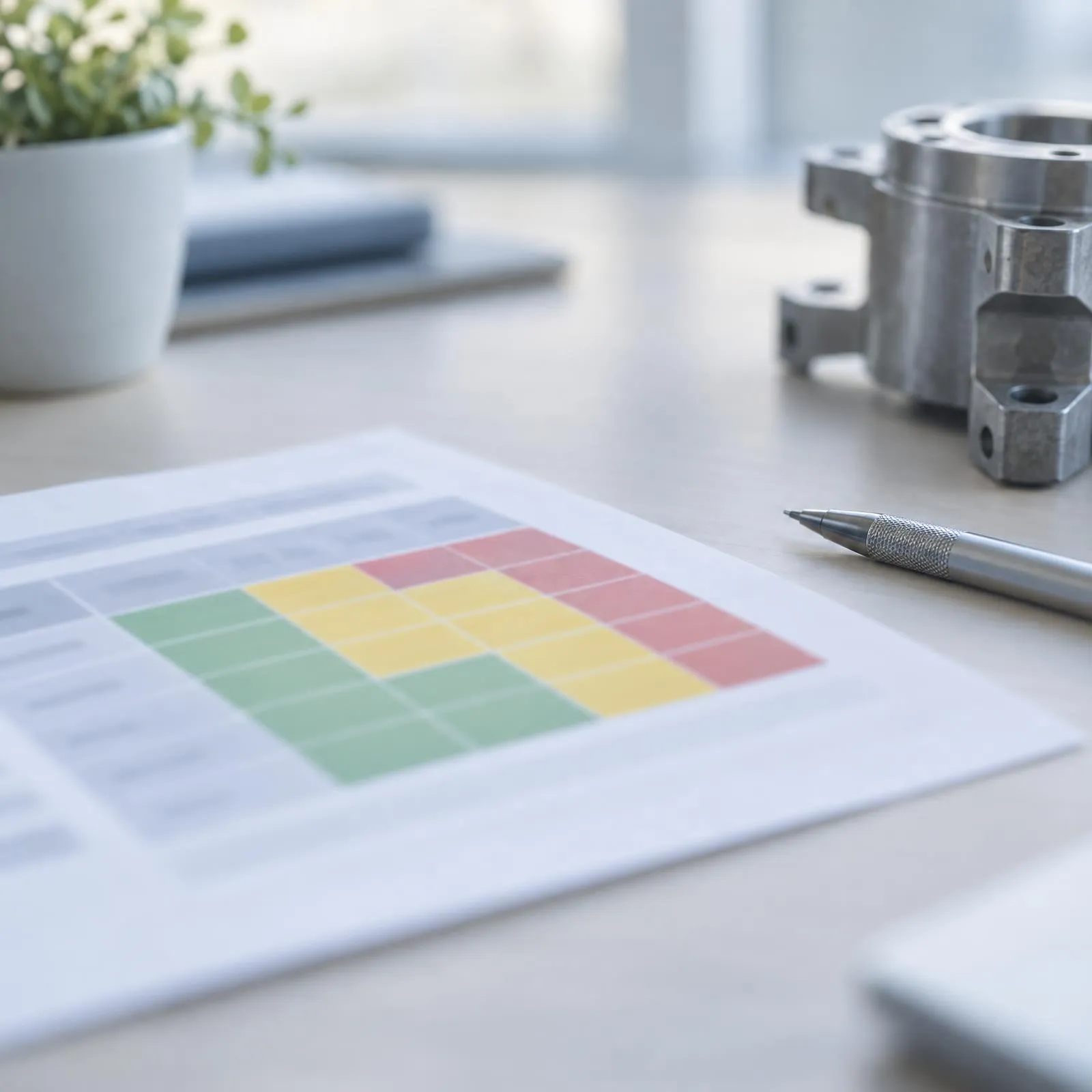
For each risk, we estimate the severity and probability of harm, decide whether it is acceptable, and propose measures in this order: inherently safe design, safeguarding, then information for use.

What you receive

  • Estimation and evaluation of each risk
  • Proposed risk reduction measures
  • Residual risks to be stated in the instructions
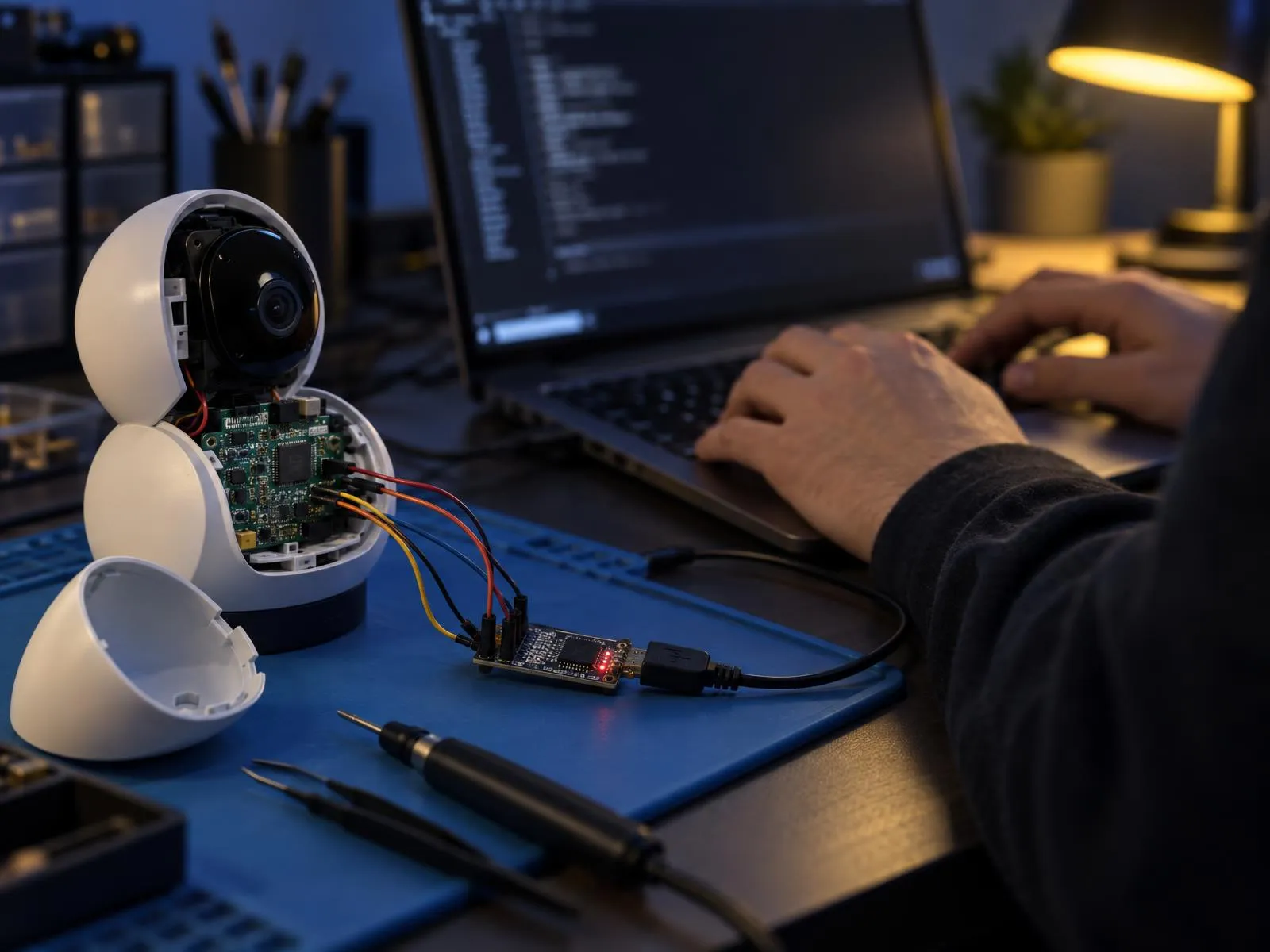
Opened connected product linked to a computer for a security analysis
Cybersecurity

Cybersecurity risks

For a connected product, risks also come from attacks: we identify the assets, threats and attack scenarios, and assess the risks with a threat analysis (TARA).

What you receive

  • Product assets and interfaces
  • Threats and attack scenarios
  • Security measures and residual risks
Threat analysis (TARA)

Also

Why a risk assessment

The foundation of your product’s safety

A requirement of EU legislation, but above all a design tool.

  • A requirement of EU legislation

    Most legislation requires it in one form or another: machinery, low voltage, medical devices, toys, connected products.

    E.g. Directive 2014/35/EU, Annex III; Directive 2009/48/EC, Article 18
  • The common thread of the technical file

    It justifies the design choices, the standards applied, the tests carried out and the warnings in the instructions. It is often the first document an auditor examines.

  • A safer product, sooner

    Carried out at the design stage, it avoids costly corrections after testing, and recalls after placing on the market.

Methods

Methods suited to each sector

These standards describe analysis methods. The choice depends on your product and the legislation that applies; we make it with you.

FieldStandardScope
MachineryEN ISO 12100:2010General principles for design, risk assessment and risk reduction
MedicalEN ISO 14971:2019/A11:2021Risk management for medical devices
MethodsIEC 31010*Risk assessment techniques: FMEA, HAZOP, fault tree analysis…
MethodsIEC 60812*Failure modes and effects analysis (FMEA)
CyberIEC 62443-3-2:2020Cybersecurity risk assessment for industrial systems
CyberISO/SAE 21434*Threat analysis and risk assessment (TARA), automotive sector
CyberETSI TS 102 165-1*Threat, vulnerability and risk analysis

* Edition to be checked for your project. The method chosen and its justification are set out in the risk assessment report.

Our approach

A risk assessment in four steps

  1. Discovery call

    Your product, its use and its stage of development. 30 minutes.

  2. Information gathering

    Drawings, schematics, prototype, field experience: we prepare the analysis.

  3. Workshops

    Identification and evaluation of risks with your teams.

  4. Report

    Risks, measures and residual risks, ready for your technical documentation.

Frequently asked questions

Frequently asked questions about risk assessment

Does your product raise a specific question? Ask an engineer directly.

Book a call
Is a risk assessment mandatory?

For most products, yes. The Machinery Regulation requires a risk assessment, the Low Voltage Directive an analysis and assessment of the risks in the technical documentation, the Toy Safety Directive a safety assessment, and the Medical Devices Regulation a risk management system. The form varies, but the aim remains the same: to find and reduce the product’s risks.

Sources: Directive 2014/35/EU, Annex III; Directive 2009/48/EC, Article 18; Regulation (EU) 2017/745, Annex I

Which method should be used?

It depends on the product and the sector: EN ISO 12100 for machinery, ISO 14971 for medical devices, methods such as FMEA or HAZOP to analyse failures, and a threat analysis (TARA) for cybersecurity. We choose the appropriate method and scale it to the complexity of your product.

When should the risk assessment be carried out?

From the design stage, while choices are still easy to change, and then whenever the product evolves. An assessment done at the end, purely for the technical file, misses its main purpose: making the product safer.

How does it differ from a threat analysis (TARA)?

A conventional risk assessment starts from the hazards the product may present to people or property. A threat analysis starts from the possible attacks on the product, its data and its interfaces. For a connected product, the two complement each other: an attack can create a hazardous situation.

What does the report contain?

The limits of the product and its intended use, the list of hazards and hazardous situations, the estimation and evaluation of each risk, the risk reduction measures adopted and the residual risks to be stated in the instructions. It fits straight into your technical documentation.

Book a call

Tell us about your product

Book a 30-minute slot with an engineer directly. No back-and-forth by email: you choose the time, we prepare the call.

Choose a time slot

Contact details

Address
Säfeli Sàrl
Route d'Englisberg 3
1763 Granges-Paccot
Languages
French, German, English
Book a call