Testing laboratory and consultancy · Granges-Paccot

Book a call

IEC/EN 62368-1 · Low Voltage Directive 2014/35/EU

CE marking of IT and multimedia equipment

Servers, routers, IoT gateways, displays, power supplies, audio and video equipment: their safety is demonstrated with IEC/EN 62368-1, their electromagnetic compatibility with EN 55032 and EN 55035. Säfeli analyses your safeguards, carries out the tests and compiles the technical file, through to the EU declaration of conformity that you sign.

IEC 62368-1:2023
Edition 4
Withdrawal of the replaced editions
15.02.2027
EMC emissions and immunity
EN 55032 · 55035
Internal production control
Module A

Who it is for

You design IT, multimedia or communication equipment

  • Network and telecom equipment

    Routers, switches, gateways, rack-mounted equipment: external circuits, power over network cable, installation by skilled persons.

  • Consumer electronics and audio-video

    Displays, speakers, players, accessories: ordinary users, batteries, stability and drops, clear instructions.

  • Connected devices and IoT

    Sensors, gateways, terminals: radio, cybersecurity, external power supply and ecodesign, in a single certification plan.

  • Power supplies and chargers

    Primary-secondary insulation, temperature rise, faults, efficiency: the points that determine the safety of the whole product.

Our services

CE conformity of your equipment, step by step

From the analysis of energy sources to the technical file, with testing carried out by the engineers who follow your project.

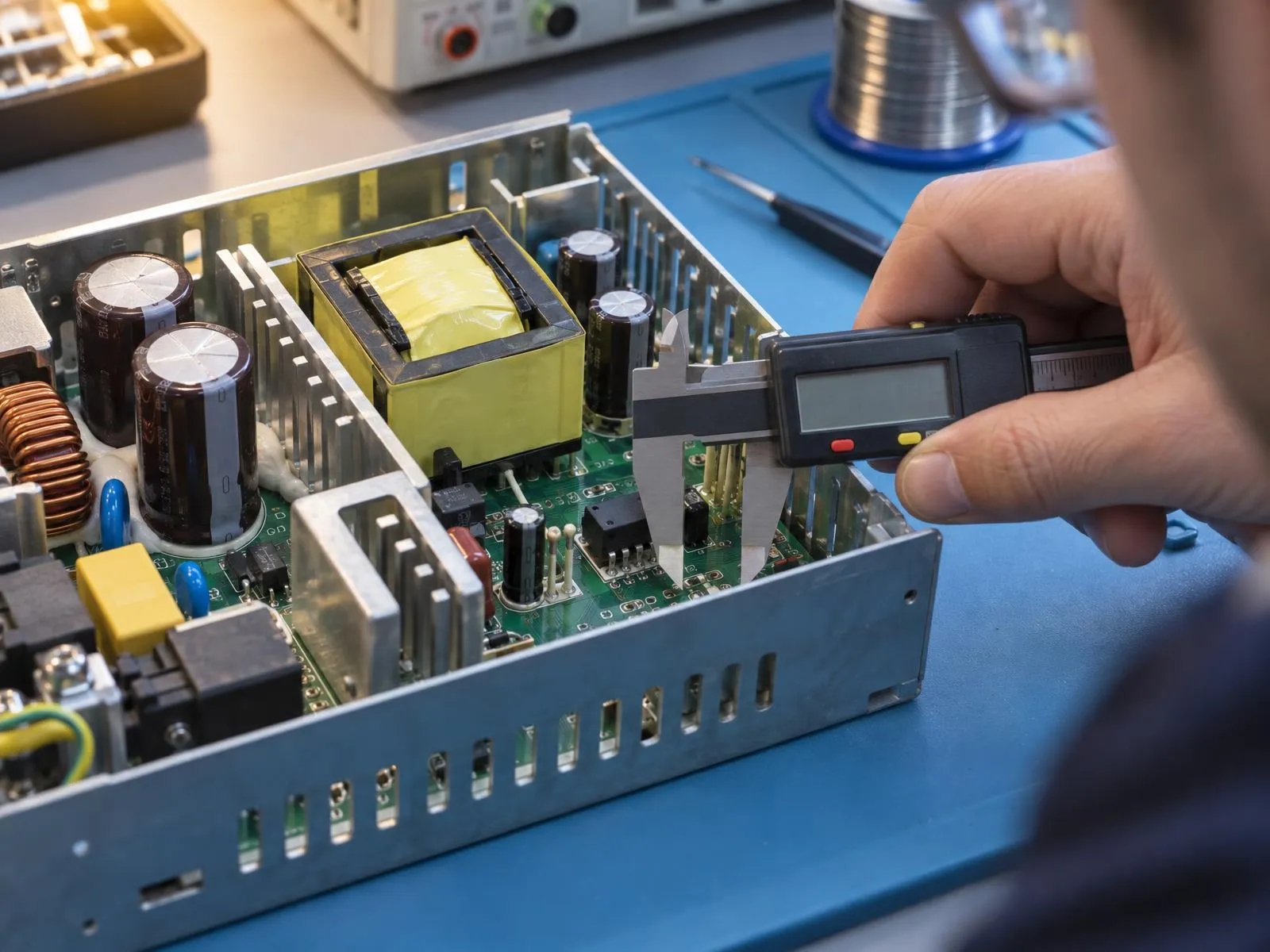
Measuring insulation distances with a calliper on an open power supply
Design review

IEC 62368-1 design review

We identify the energy sources in your product, their class and the safeguards that separate them from the persons exposed. Insulation, clearances and creepage distances, critical components: deviations are corrected before the prototype.

What you receive

  • Table of energy sources and safeguards
  • Insulation diagram
  • List of critical components

References

  • IEC 62368-1:2023
  • EN IEC 62368-1:2024/A11:2024
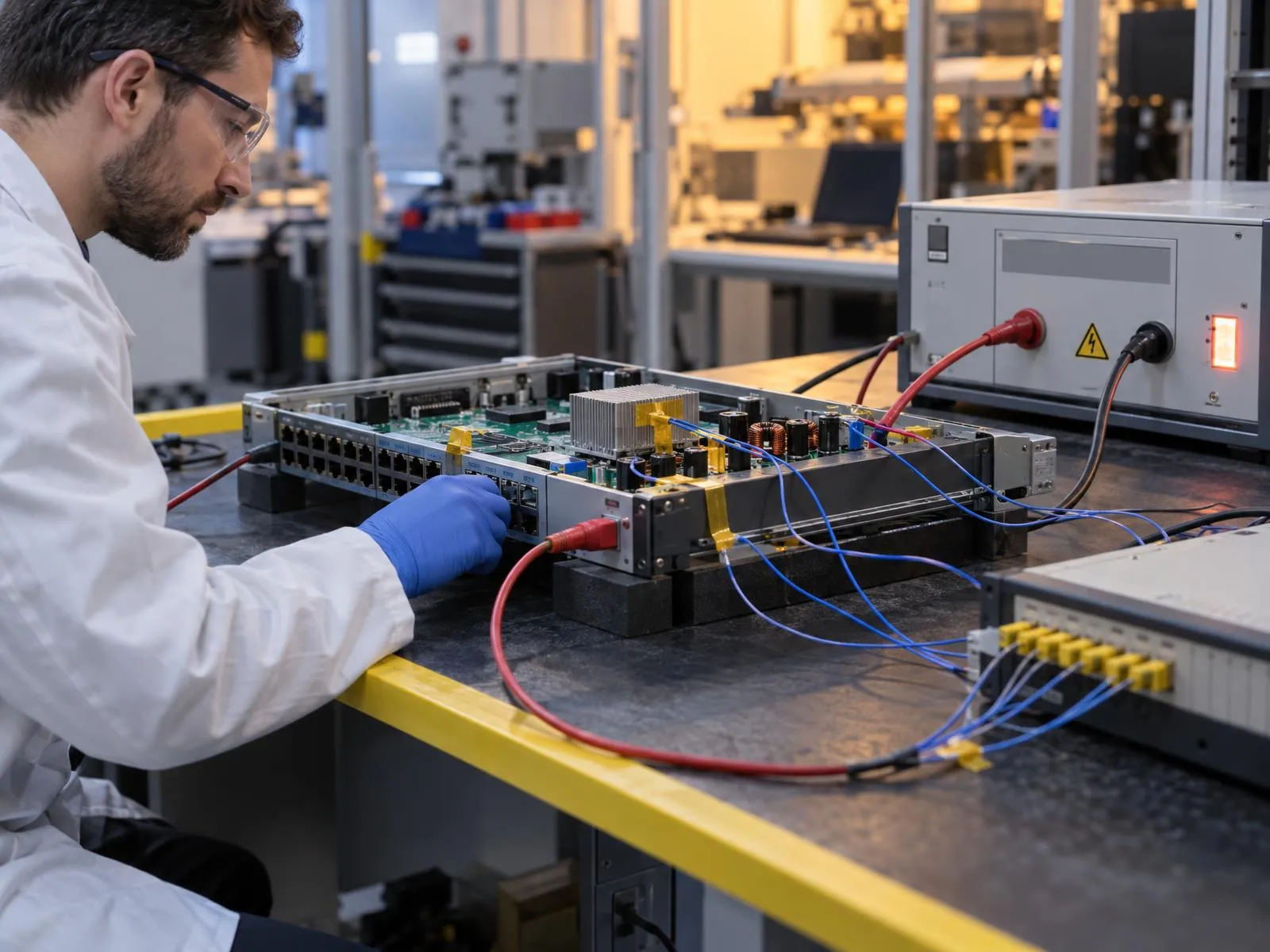
Engineer preparing an electrical safety test on an open network switch
Testing

Electrical safety testing

Dielectric strength, touch current, temperature rise with thermocouples, tests under abnormal operating and single fault conditions: we carry out the tests and write the report to IEC 62368-1.

What you receive

  • Test plan
  • IEC 62368-1 test report
  • Non-conformities and proposed corrections

References

  • IEC 62368-1, clauses 5 and 9
  • IEC 62368-1, Annex B
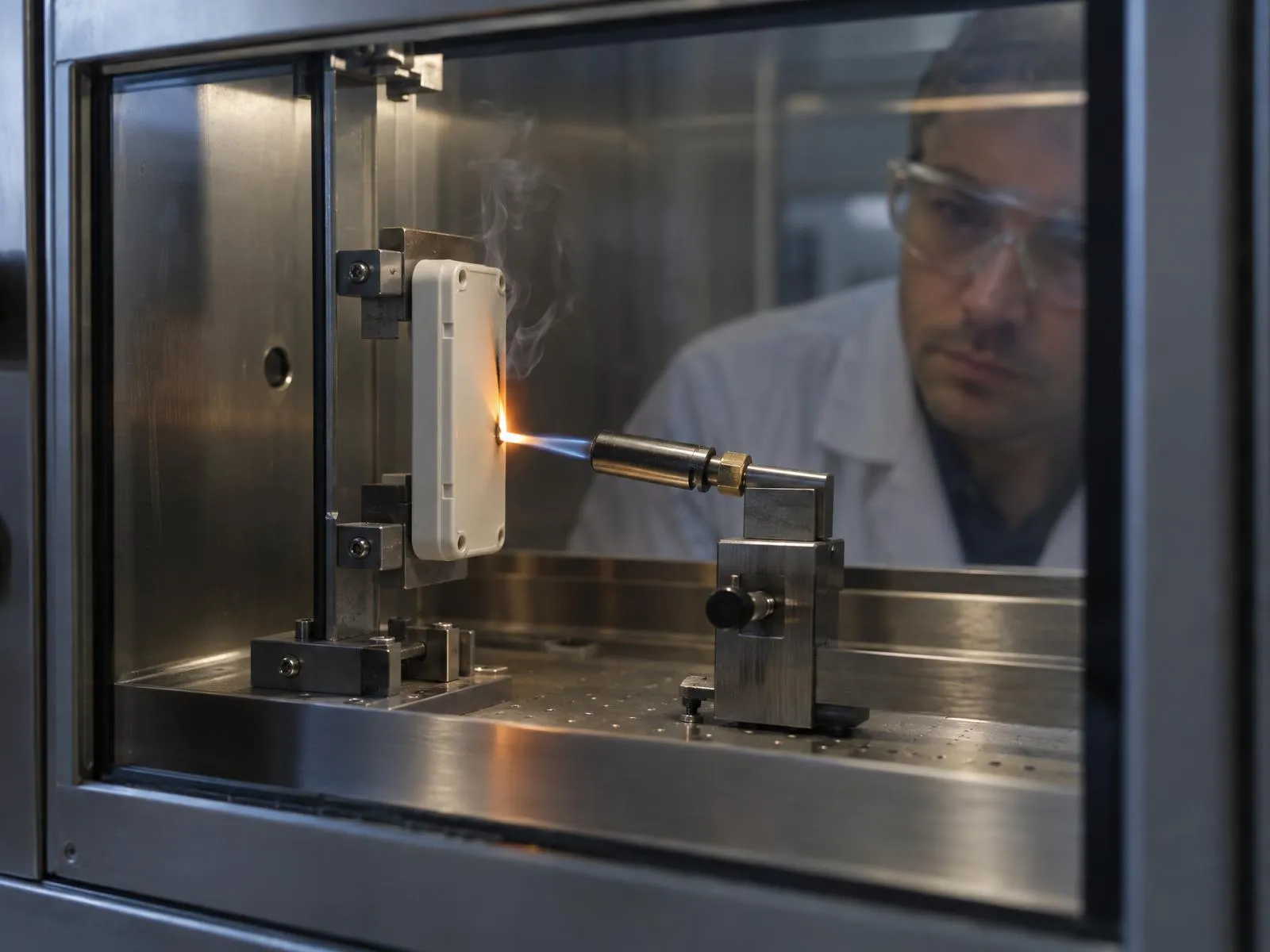
Flame test on a plastic enclosure in a glazed test chamber
Fire

Fire protection

Classification of circuits as PS1, PS2 or PS3 power sources, choice of materials and enclosure, openings: we check that the product prevents ignition and limits the spread of fire, with tests where necessary.

What you receive

  • PS classification of circuits
  • Assessment of materials and enclosure
  • Heat and fire resistance tests if required

References

  • IEC 62368-1, clause 6
  • IEC 62368-1, Annex S
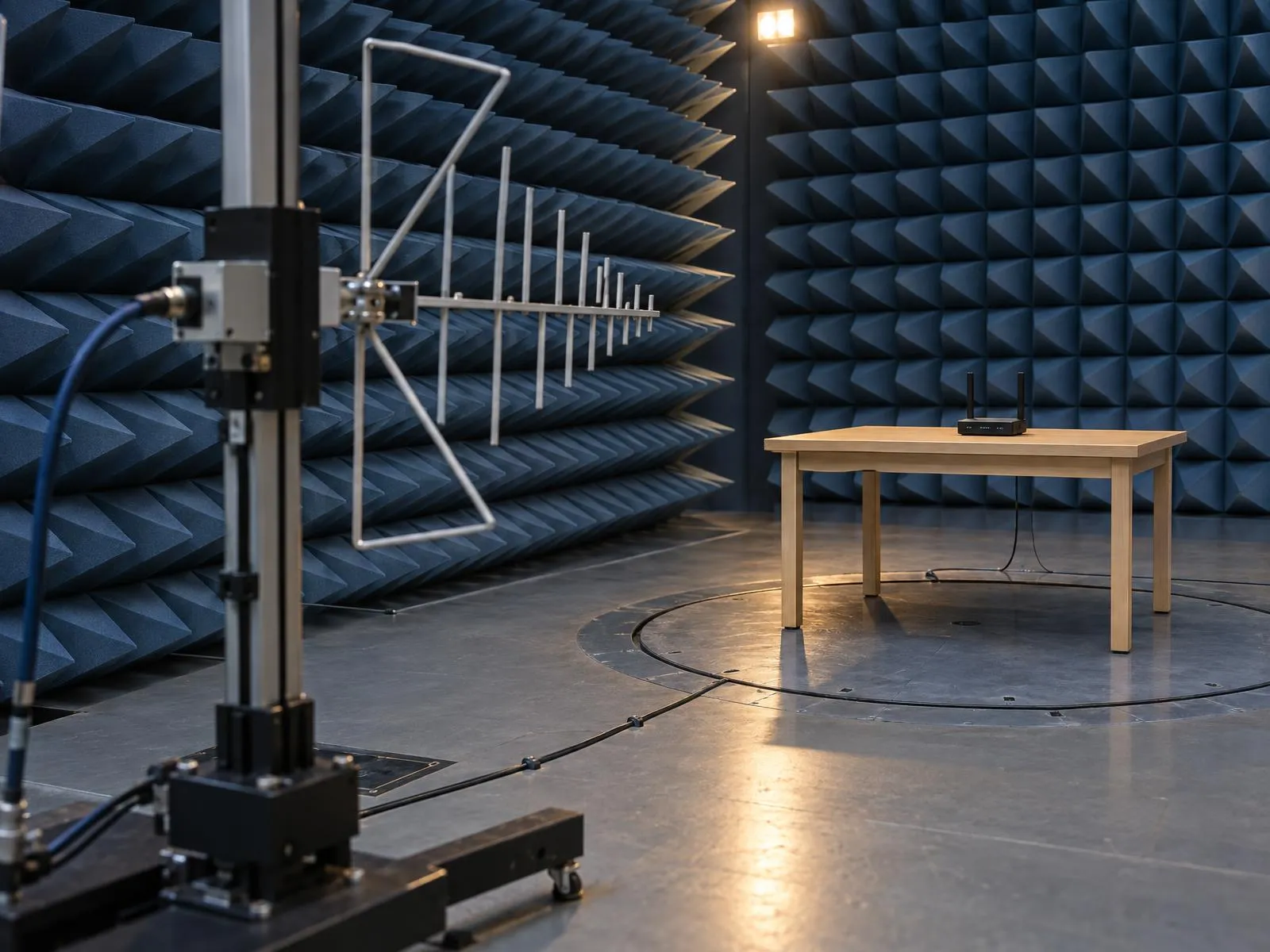
Router on a turntable in an anechoic chamber, facing a measurement antenna
EMC and radio

EMC, radio and technical file

Emissions to EN 55032 (class A or B), immunity to EN 55035 and, for radio products, the standards of the Radio Equipment Directive (RED). We bring together reports, marking and instructions in the technical file and prepare the EU declaration of conformity.

What you receive

  • EMC test plan
  • EMC test reports
  • Technical file and EU declaration of conformity

References

  • EN 55032:2015/A11:2020
  • EN 55035:2017/A11:2020
  • Directive 2014/53/EU

Also

IEC 62368-1 edition 4

IEC 62368-1 edition 4: what changes by 15 February 2027

IEC 62368-1:2023 replaces edition 3 of 2018. In Europe, EN IEC 62368-1:2024/A11:2024 adopts its content with European common modifications. The presumption of conformity depends on the reference published in the Official Journal of the EU: we check the edition applicable at your placing-on-the-market date.

  1. 2018IEC 62368-1, edition 3
  2. 19.04.2024Publication of EN IEC 62368-1:2024/A11:2024
  3. 15.02.2027Date of withdrawal of the replaced standards (dow)
  • External circuits

    A new table brings together the requirements for external circuits: communication ports, cables to other buildings, telecommunication links.

    IEC 62368-1:2023, foreword a)
  • Openings in fire enclosures

    The requirements for openings in fire enclosures are revised. Ventilation grilles and louvres need to be checked again.

    IEC 62368-1:2023, foreword b)
  • Liquid-filled components

    Liquid cooling, heat pipes, components containing a fluid: the requirements are revised, a sensitive point for servers and computing equipment.

    IEC 62368-1:2023, foreword c)
  • Battery charging

    The battery charging requirements are revised: charging voltages and currents, protection, behaviour under fault conditions.

    IEC 62368-1:2023, foreword d)
  • Products assessed to edition 3

    We compare your existing report with edition 4 and limit the additional tests to the points that change for your product.

    EN IEC 62368-1:2024/A11:2024
  • IEC 60950-1 and IEC 60065 components

    Edition 4 removes the direct acceptance of components and sub-assemblies assessed to the former IT and audio-video standards. Power supplies and modules must now be justified to IEC 62368-1.

    IEC 62368-1:2023, 4.1.1

Sources: IEC 62368-1:2023, foreword; EN IEC 62368-1:2024/A11:2024 (date of withdrawal set by CENELEC).

The standard's method

IEC 62368-1 reasons in terms of energy sources

Rather than a list of requirements per product type, the standard identifies what can cause injury, who can be exposed and what protects them. This is the reasoning we apply to your product.

  • 1. Identify the energy sources

    Electrical (ES), power that can cause a fire (PS), mechanical (MS), thermal (TS), radiation (RS): each source is classified 1, 2 or 3, from "detectable" to "may cause injury" or "may ignite".

    IEC 62368-1, 0.3 and 0.4
  • 2. Identify the persons exposed

    Ordinary, instructed or skilled person. An ordinary person must not be exposed to a source that can cause pain; an instructed person, to a source that can cause injury.

    IEC 62368-1, 0.2
  • 3. Interpose safeguards

    Between the source and the person: basic, supplementary or reinforced safeguard, instructional safeguard (marking, instructions). The tests verify that they hold under normal and abnormal operating conditions and under single fault conditions.

    IEC 62368-1, 0.5 and Annex B

Cybersecurity

Connected equipment: RED and the Cyber Resilience Act

A router, a gateway or any internet-connected radio equipment has had to meet the cybersecurity requirements of the Radio Equipment Directive (RED) since 1 August 2025, which can be demonstrated with the EN 18031 series. The Cyber Resilience Act extends these requirements to all products with digital elements: reporting of actively exploited vulnerabilities from 11 September 2026, the whole Regulation from 11 December 2027.

Sources: Delegated Regulation (EU) 2022/30; Regulation (EU) 2024/2847, Articles 14 and 71

Standards

Standards for IT and multimedia equipment

IEC 62368-1 covers safety; EMC, radio, cybersecurity and batteries have their own standards. The certification plan sets the combination that applies to your product.

FieldStandardScope
SafetyEN IEC 62368-1:2024/A11:2024Audio/video, information and communication technology equipment: safety requirements (IEC 62368-1:2023, edition 4)
SafetyEN IEC 62368-1:2020+A11:2020Previous edition (IEC 62368-1:2018), replaced: date of withdrawal 15.02.2027
SafetyIEC 62368-3*DC power transfer through communication cables and ports
EMCEN 55032:2015/A11:2020Emissions of multimedia equipment, classes A and B
EMCEN 55035:2017/A11:2020Immunity of multimedia equipment
EMCEN IEC 61000-3-2*Harmonic current emissions
EMCEN 61000-3-3*Voltage fluctuations and flicker
RadioEN 300 328*2.4 GHz radio equipment: Wi-Fi, Bluetooth
RadioEN 301 489-1 and -17*EMC of radio equipment
CyberEN 18031-1*Cybersecurity of internet-connected radio equipment
BatteryIEC 62133-2*Safety of portable lithium cells and batteries
LaserIEC 60825-1*Safety of laser products, for example optical modules
RoHSEN IEC 63000:2018Technical documentation for the assessment of hazardous substances

* Edition to be checked for your project. Standards remain voluntary; applying a harmonised standard whose reference is published in the Official Journal of the EU gives a presumption of conformity with the requirements it covers (Directive 2014/35/EU, Article 12). The harmonised status of each edition must be checked in the OJEU.

Beyond safety

Ecodesign, common charger, batteries

Other European legislation applies to IT equipment. We build it into the certification plan so that none of it is discovered at the end of the project.

  • Standby and networked standby

    Power consumption in off mode, standby and networked standby of household and office electrical equipment.

    Regulation (EU) 2023/826
  • External power supplies

    Average active efficiency and no-load power consumption of external power supplies.

    Regulation (EU) 2019/1782
  • Common charger

    USB-C port and common charging protocol for mobile phones, tablets, laptops and other rechargeable radio equipment.

    Directive (EU) 2022/2380
  • Batteries

    Marking, documentation and, for portable batteries, removability and replaceability from 18 February 2027.

    Regulation (EU) 2023/1542, Article 11

Our approach

CE marking of your equipment in four steps

  1. Discovery call

    Your product, its use, your markets and your timeline. 30 minutes.

  2. Certification plan

    Applicable legislation, safety, EMC and radio standards, testing, budget and schedule.

  3. Review and testing

    Energy sources and safeguards, safety and EMC tests, corrections with your teams.

  4. Technical file and declaration

    Technical file, marking, instructions and EU declaration: you affix the CE marking.

Swiss market

Selling your equipment in Switzerland and the EU

In Switzerland, the Swiss Low Voltage Ordinance (NEV) and the Swiss EMC Ordinance (VEMV) adopt the European requirements; radio equipment falls under the Swiss Ordinance on Telecommunications Installations (FAV). The same standards and the same technical file serve both markets. We check for you the obligations specific to the Swiss market.

Sources: NEV, SR 734.26; VEMV, SR 734.5; FAV (Fedlex).

Frequently asked questions

Frequently asked questions on CE marking of IT equipment

Does your equipment raise a specific question? Ask an engineer directly.

Book a call
Which standard covers the electrical safety of IT equipment?

IEC/EN 62368-1, which covers audio/video, information and communication technology equipment. It replaces IEC 60950-1 (IT) and IEC 60065 (audio-video). For EMC, EN 55032 (emissions) and EN 55035 (immunity) are applied.

Sources: IEC 62368-1, scope; EN 55032:2015/A11:2020; EN 55035:2017/A11:2020

What changes with IEC 62368-1 edition 4?

Edition 4 (IEC 62368-1:2023) introduces four major technical changes: a new table for external circuits, openings in fire enclosures, liquid-filled components and battery charging. In Europe, EN IEC 62368-1:2024/A11:2024 was published on 19 April 2024; the date of withdrawal of the standards it replaces is set at 15 February 2027.

Sources: IEC 62368-1:2023, foreword; EN IEC 62368-1:2024/A11:2024

Does my product assessed to edition 3 need to be reassessed?

Not necessarily. The presumption of conformity depends on the reference cited in the Official Journal of the EU: as at 30 April 2026, it is still EN 62368-1:2014 that is listed for the Low Voltage Directive, not the 2020 or 2024 editions. 15 February 2027 is the date of withdrawal of the national standards replaced by EN IEC 62368-1:2024. We check the situation at your placing-on-the-market date and, if edition 4 is required, a gap analysis often limits the additional tests.

Sources: Implementing Decision (EU) 2023/2723, consolidated version of 30.04.2026; EN IEC 62368-1:2024/A11:2024; Directive 2014/35/EU, Article 12

My product is powered at 5 V via USB: does electrical safety apply?

It falls outside the scope of the Low Voltage Directive, which starts at 75 V DC. But a consumer product remains subject to the General Product Safety Regulation, and a radio product to the Radio Equipment Directive (RED), which covers safety without a voltage threshold. IEC 62368-1 remains the reference for demonstrating safety: fire, temperature rise, batteries.

Sources: Directive 2014/35/EU, Article 1; Regulation (EU) 2023/988; Directive 2014/53/EU, Article 3

Does IT equipment have to be certified by a third party?

For CE marking, no: the manufacturer assesses conformity itself (internal production control), compiles the technical documentation and signs the EU declaration of conformity. A test report produced by Säfeli strengthens the technical file and answers requests from your customers and distributors. The IECEE CB Scheme is a voluntary scheme, useful for export outside the EU.

Sources: Directive 2014/35/EU, Annex III; Directive 2014/30/EU, Annex II

Class A or class B for EMC: which to choose?

Class B covers equipment that can be used in residential environments; its emission limits are stricter. Class A covers other environments, for example industrial sites or server rooms, and requires a warning in the instructions. The choice depends on the intended use and the target customers.

Sources: EN 55032:2015/A11:2020

Is IT equipment a machine?

No, as long as it falls under the Low Voltage Directive or the Radio Equipment Directive (RED): information technology equipment is excluded from the Machinery Regulation. A product that combines IT and motorised mechanics, such as an automated system or a robot, can however be a machine.

Sources: Regulation (EU) 2023/1230, Article 2(2), point (p)(iii)

What cybersecurity obligations apply to connected equipment?

Internet-connected radio equipment has had to meet the cybersecurity requirements of the Radio Equipment Directive (RED) since 1 August 2025, which can be demonstrated with the EN 18031 series. The Cyber Resilience Act then covers all products with digital elements: reporting from 11 September 2026, the whole Regulation from 11 December 2027.

Sources: Delegated Regulation (EU) 2022/30; Regulation (EU) 2024/2847, Articles 14 and 71

Book a call

Tell us about your equipment

Book a 30-minute slot with an engineer directly. No back-and-forth by email: you choose the time, we prepare the call.

Choose a time slot

Contact details

Address
Säfeli Sàrl
Route d'Englisberg 3
1763 Granges-Paccot
Languages
French, German, English
Book a call