Testing laboratory and consultancy · Granges-Paccot

Book a call

Testing · Electrical safety

Electrical safety testing

Accessible parts, insulation, protective earth, leakage currents, temperature rise, fault conditions: we verify that your product can neither cause electric shock nor start a fire, according to the standard for its product family, whether it is laboratory equipment, a machine, IT equipment, a household appliance or a medical device. You receive a test report ready for your technical documentation.

AC: scope of the Low Voltage Directive
50–1000 V
No notified body under the LVD
Module A
Product standard families
5
For your technical documentation
Report

Product standards

One standard per product family

Each product family has its own electrical safety standard, with its own limits and methods. It is chosen according to the product's main function and its users.

  • Laboratory, measurement, control

    Laboratory, measurement and control equipment: limits for accessible parts, single fault tests, overvoltage categories.

    IEC 61010-1
  • Audio, video and IT

    ICT and multimedia equipment: energy sources classified ES1, ES2 and ES3, and safeguards between the source and the user.

    IEC 62368-1
  • Household appliances

    Household and similar electrical appliances, always with the Part 2 for the specific type of appliance: heating, cooking, floor care…

    IEC 60335-1 and Parts 2
  • Machinery

    Electrical equipment of machines: protection by enclosures, protective bonding circuit, final verification under clause 18.

    IEC 60204-1
  • Medical devices

    Means of protection for patient and operator, very low leakage currents measured in microamperes, single fault condition.

    IEC 60601-1

Our testing

The main families of tests

The standards differ in the detail, but the questions remain the same: can a hazardous voltage be touched, does the insulation hold, what happens in the event of a fault?

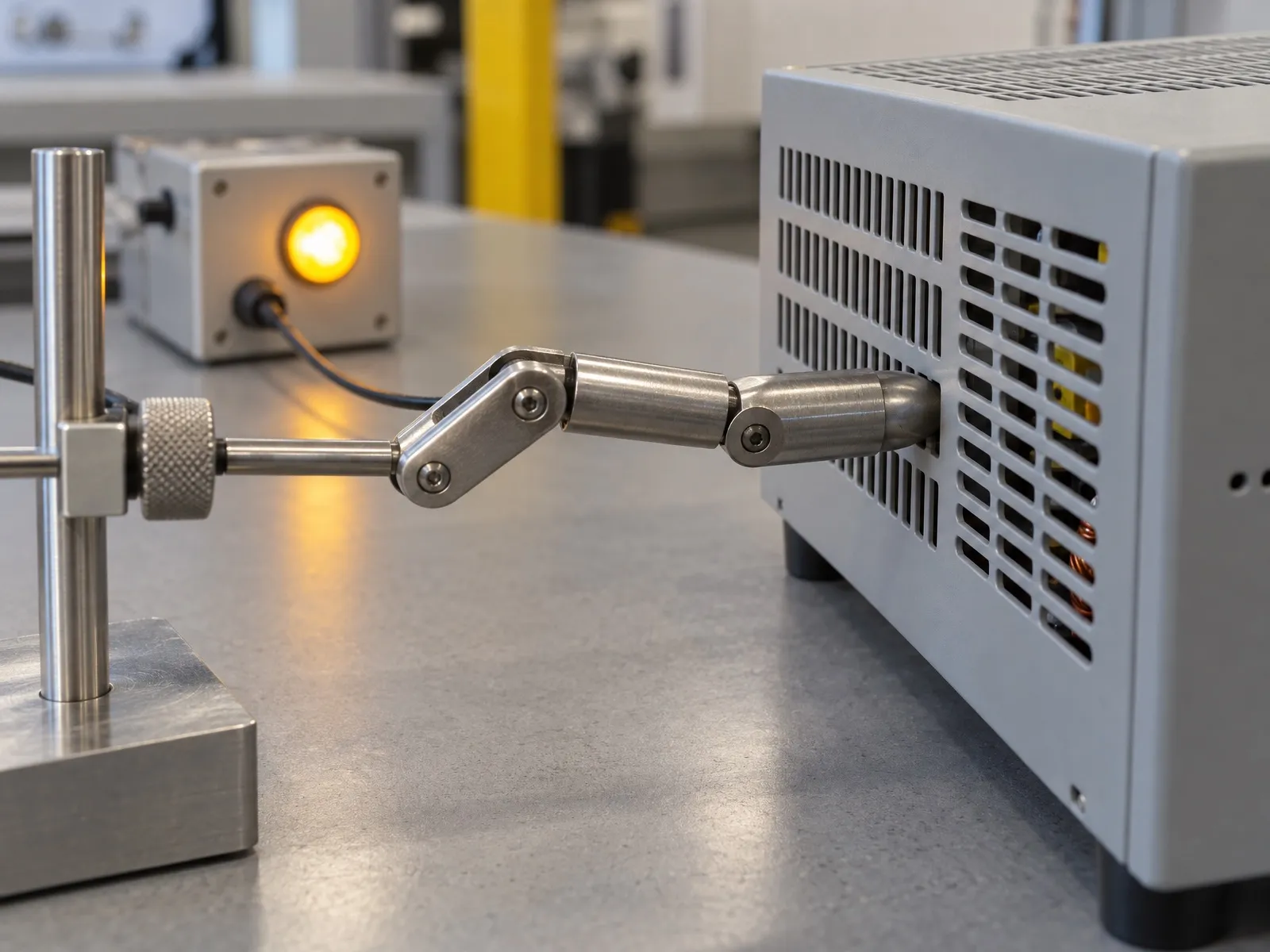
Jointed test finger inserted into the ventilation slots of a power supply
Accessible parts

Access to live parts and accessible voltages

Jointed test finger, rigid test finger, test pin: we determine what a user can touch, then measure voltages, currents and charges on those parts, in normal condition and in single fault condition. We also check the voltage remaining on the plug pins a few seconds after unplugging.

What you receive

  • Determination of accessible parts
  • Measurements in normal and single fault condition
  • Residual charge after unplugging

References

  • IEC 61032 (test probes)
  • IEC 61010-1, 6.2 and 6.3
Two electrodes separated by an insulator that holds back the electric field lines
Insulation

Dielectric strength and insulation resistance

Withstand voltage test, AC or DC, between mains-connected circuits and accessible parts, often after humidity preconditioning; insulation resistance measurement. No disruptive discharge may occur.

What you receive

  • Withstand voltage tests
  • Insulation resistance measurement
  • Humidity preconditioning

References

  • IEC 61010-1, 6.8
  • IEC 60335-1, clauses 13 and 16
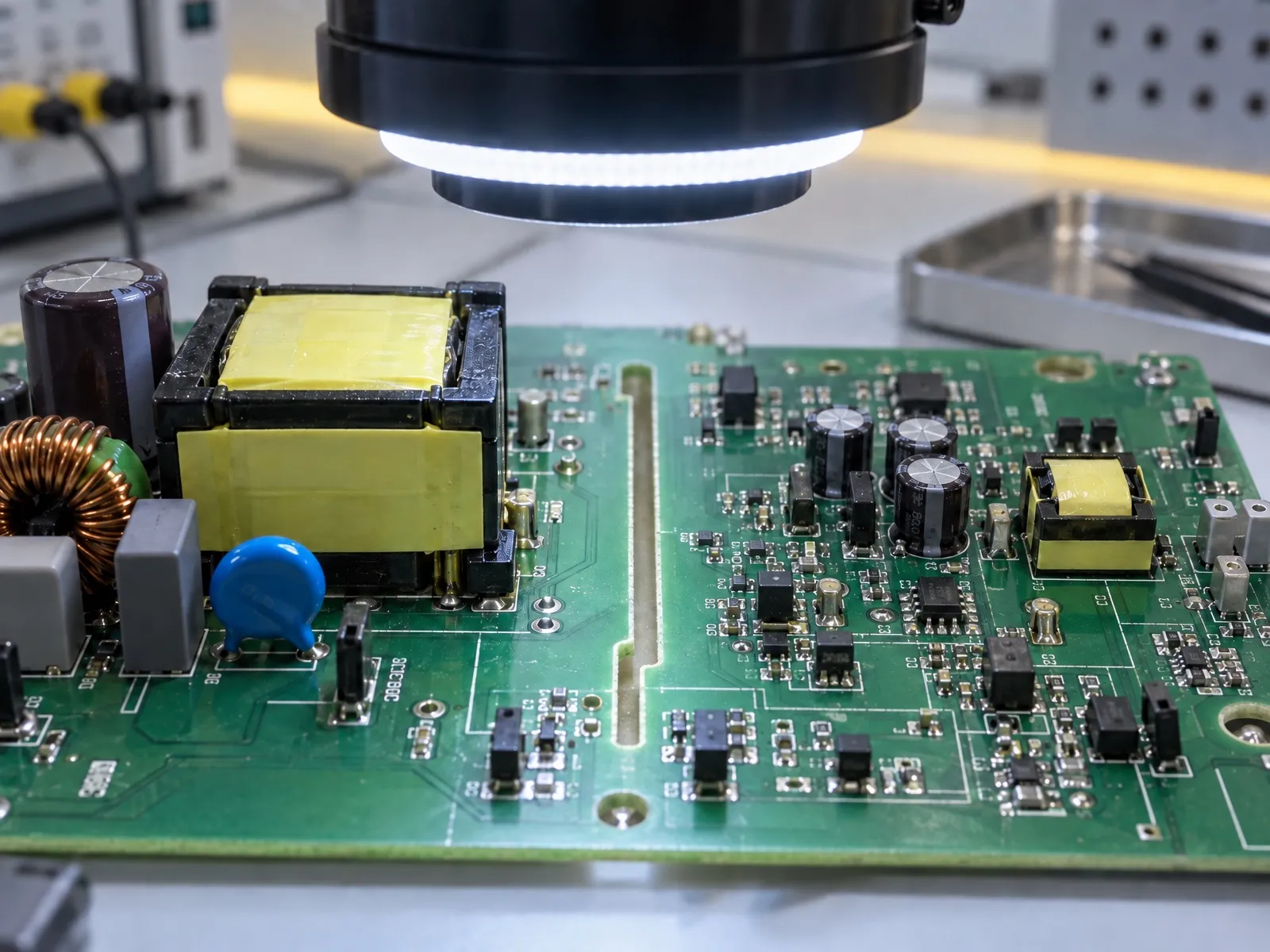
Power supply printed circuit board with an isolation slot between primary and secondary, under a measuring microscope
Clearances

Clearances and creepage distances

We measure the distances through air and along surfaces between hazardous and accessible circuits, on printed circuit boards as well as on components, and compare them with the values required for the overvoltage category, pollution degree and material.

What you receive

  • Survey of critical distances
  • Overvoltage category and pollution degree
  • Assessment of solid insulation

References

  • IEC 60664-1
  • IEC 62368-1, 5.4
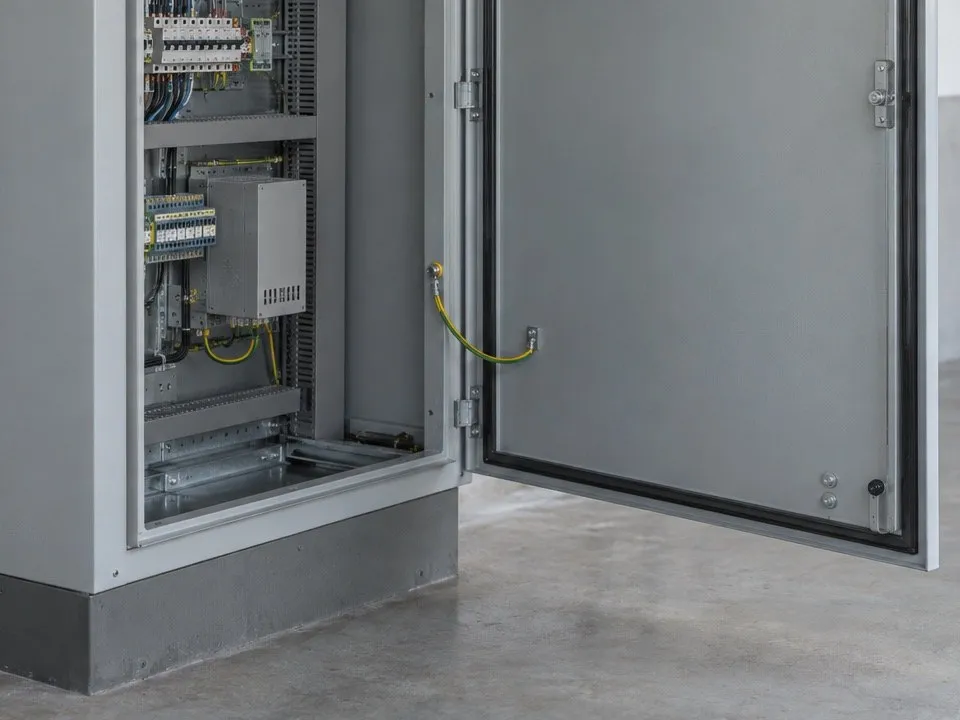
Electrical cabinet with its door open and a green-and-yellow earth conductor between the door and the frame
Protective earth

Protective earth continuity

For a Class I appliance, we pass a high current between the earth terminal or pin and each accessible conductive part, and check that the resistance remains very low, around 0.1 Ω depending on the standard. For a machine, the continuity of the whole protective bonding circuit and the conditions for automatic disconnection.

What you receive

  • High-current continuity test
  • Protective bonding resistance
  • Verification of the protective bonding circuit of machines

References

  • IEC 60335-1, 27.5
  • IEC 60204-1, 18.2
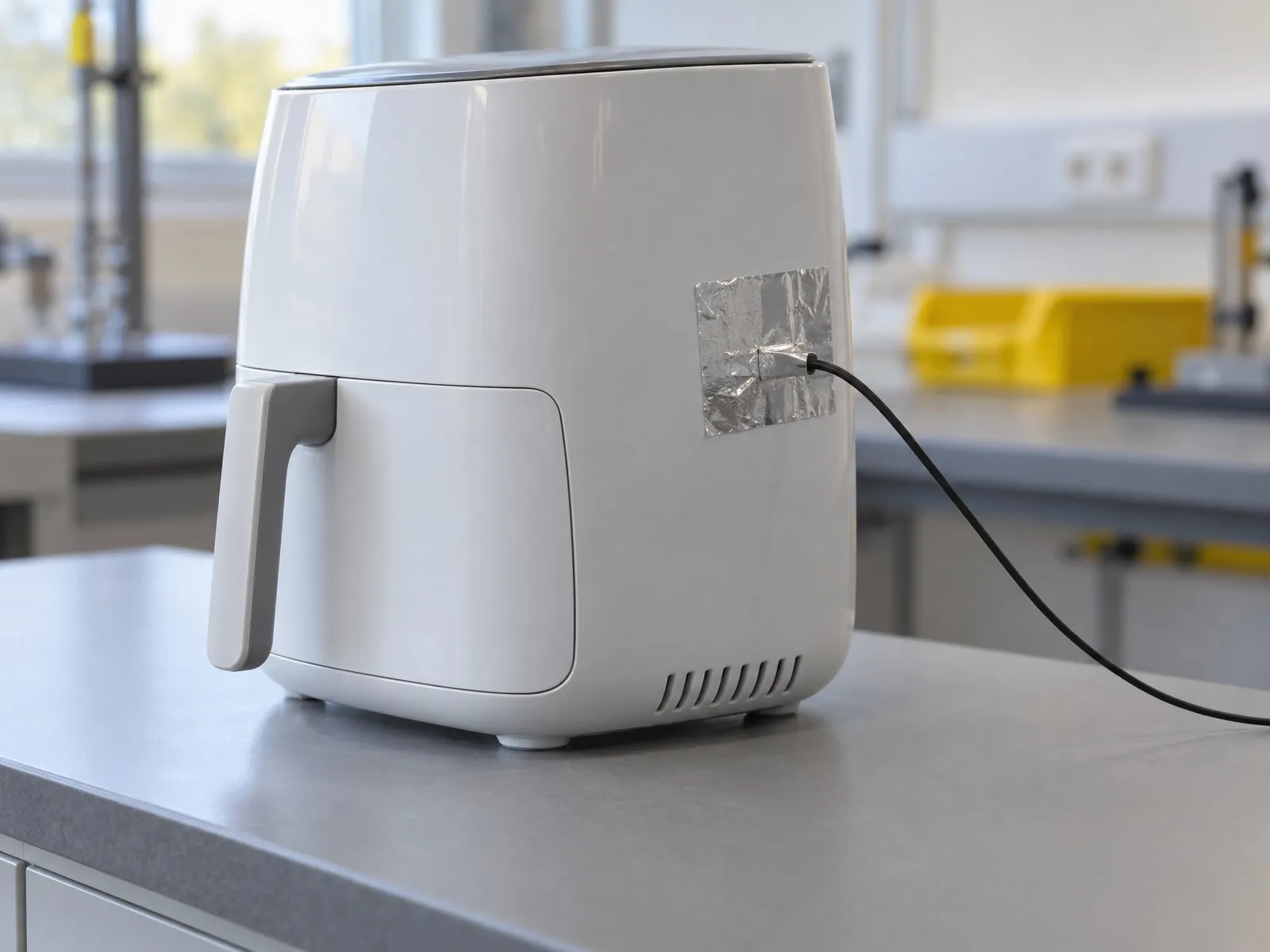
Household appliance with aluminium foil stuck to the enclosure and a measuring lead
Leakage currents

Touch current and leakage current

We measure the current that would flow through a person touching the appliance, using the standardised measuring networks, at operating temperature and after the humidity test. The limits depend on the class of the appliance: a few tenths of a milliampere for a household appliance, around a hundred microamperes for a medical device.

What you receive

  • Touch current
  • Protective conductor current
  • Measurements in single fault condition

References

  • IEC 60990:2016
  • IEC 60601-1, 8.7
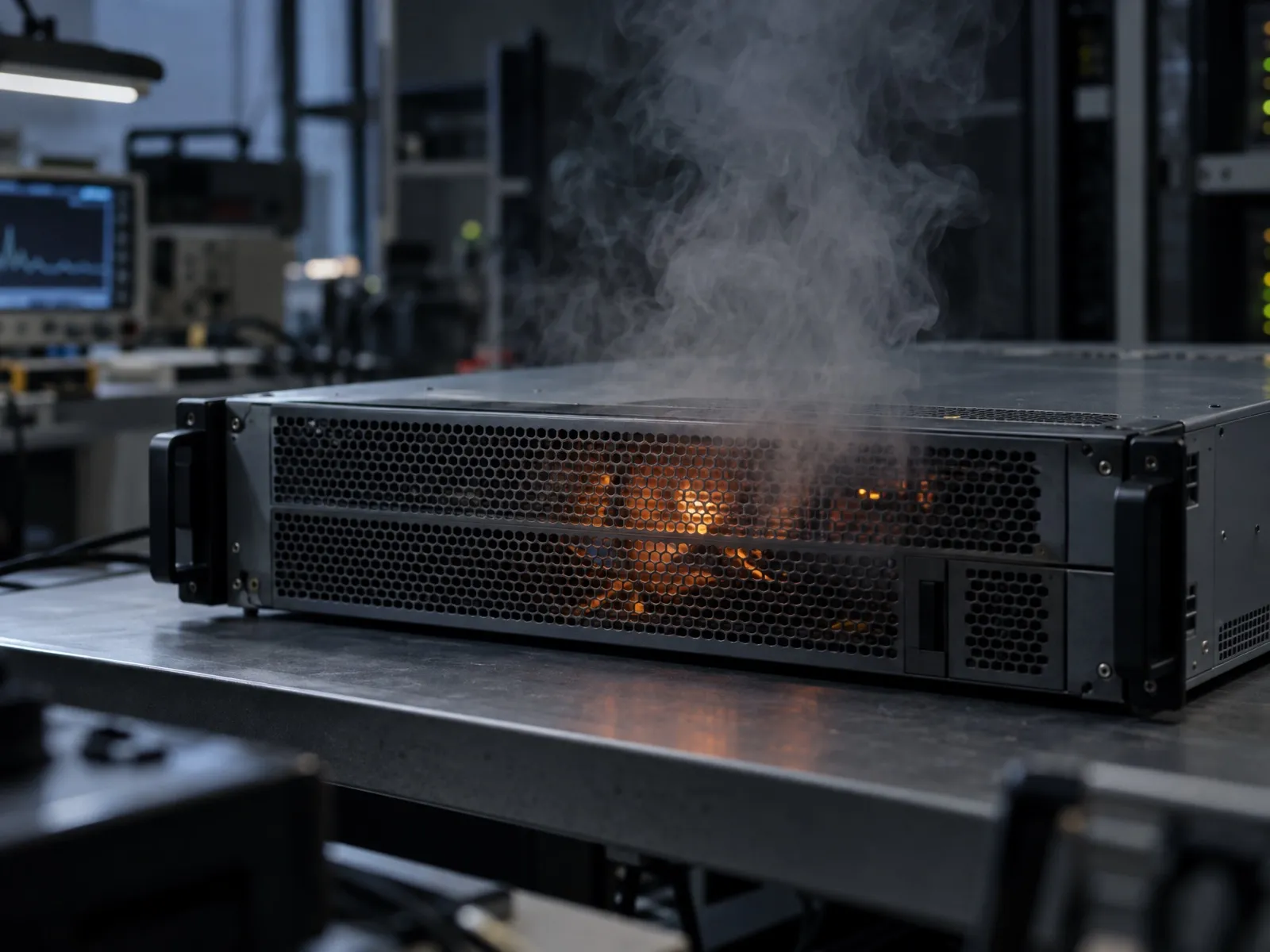
Server under test with smoke escaping through its ventilation grille
Temperature rise and faults

Temperature rise, fault conditions and fire

Thermocouples on components and surfaces, operation under the most unfavourable conditions, then faults simulated one by one: short-circuited component, locked fan, overloaded transformer. We check that no hazard arises and that fire does not spread, including by means of the glow-wire test.

What you receive

  • Temperature rise tests
  • Fault condition tests
  • Resistance to heat and fire

References

  • IEC 61010-1, 4.4 and 10
  • IEC 60695-2-11
Rating plate of an appliance, cotton pad and solvent for the marking durability test
Markings and components

Markings, instructions and critical components

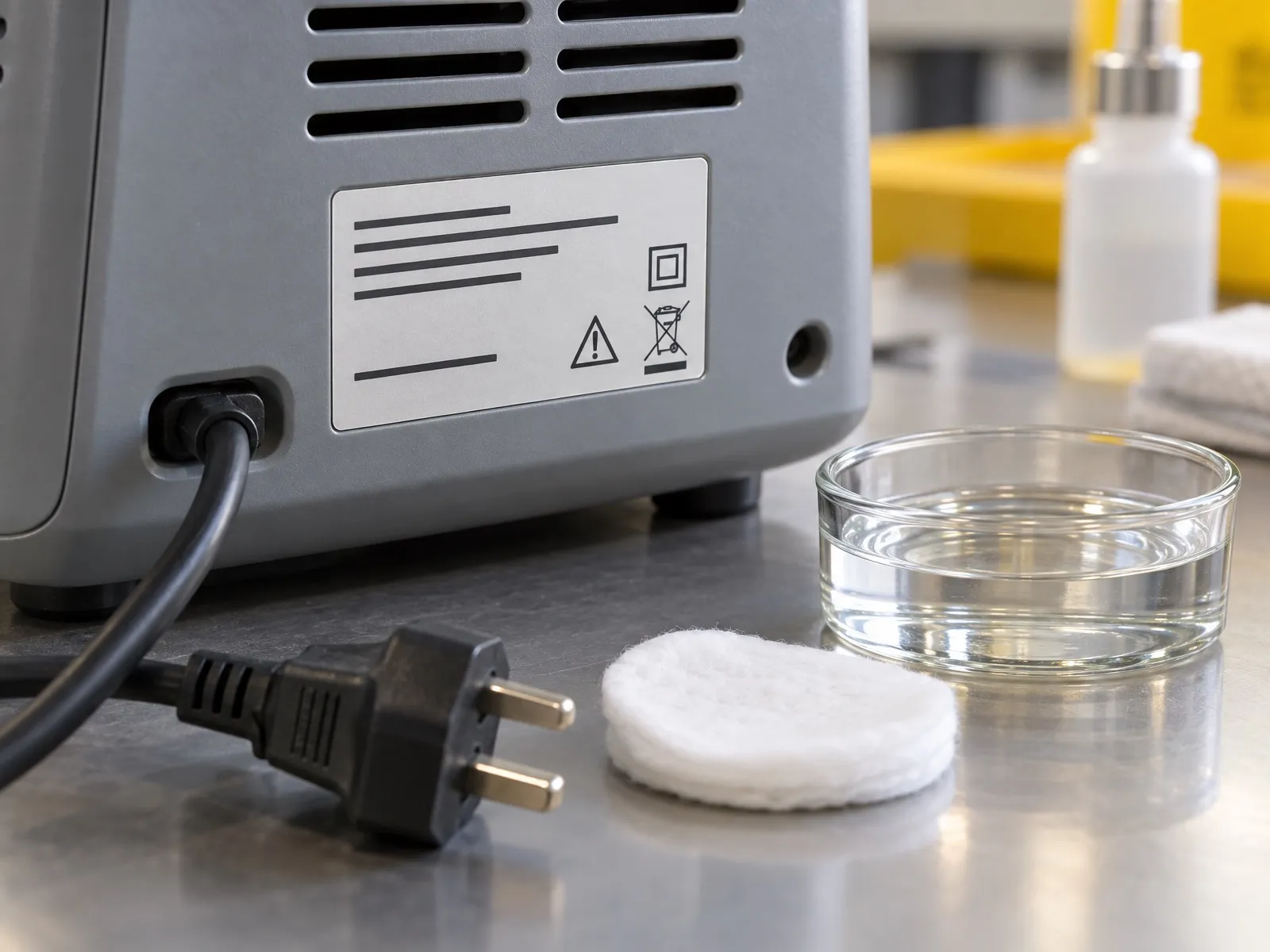
Rating plate, symbols and warnings, durability of markings by rubbing with water and then with solvent, cord and plug, critical components and their certificates: we check everything that cannot be measured with a tester but determines conformity.

What you receive

  • Check of markings and instructions
  • Marking durability test
  • List of critical components

References

  • IEC 60335-1, 7.14
  • IEC 62368-1, Annex G

Also

Regulation

The regulatory framework

The Low Voltage Directive covers most electrical products, but not all of them: depending on the product, the same safety objectives come through the Radio Equipment Directive (RED), the Machinery Regulation or the Medical Device Regulation.

  • Low Voltage Directive

    Electrical equipment rated from 50 to 1000 V AC and from 75 to 1500 V DC, at the input or the output.

    Directive 2014/35/EU, Art. 1 and Annex I
  • No notified body

    A single procedure, internal production control: the manufacturer declares conformity, and the test reports go into its technical documentation.

    Directive 2014/35/EU, recital 9 and Annex III
  • Radio equipment

    The safety objectives of the Low Voltage Directive apply with no voltage limit: a battery-powered connected device is covered.

    Directive 2014/53/EU, Article 3(1)(a)
  • Machinery

    Electrical hazards of a machine fall under the Machinery Regulation, which refers to the Low Voltage Directive's safety objectives.

    Regulation (EU) 2023/1230, Annex III, 1.5.1
  • Medical devices

    Excluded from the Low Voltage Directive, they must avoid, as far as possible, any risk of electric shock, including in single fault condition.

    Regulation (EU) 2017/745, Annex I, 18.7
  • Below 50 V

    Outside the Low Voltage Directive, but not outside all rules: general product safety applies, and the charger or power supply remains subject to the directive.

    Commission LVD Guide; Regulation (EU) 2023/988

Sources: Directive 2014/35/EU; Directive 2014/53/EU; Regulation (EU) 2023/1230; Regulation (EU) 2017/745; Commission LVD Guide (2018); Regulation (EU) 2023/988.

Standards

Editions and status in the Official Journal

The latest IEC edition is not always the one that gives presumption of conformity in Europe. We check both for every project.

FieldStandardScope
LaboratoryEN 61010-1:2010+A1:2019Cited in the OJEU (LVD); IEC 61010-1 edition 3.1
IT, audio, videoEN 62368-1:2014+AC:2015Edition cited in the OJEU (LVD)
IT, audio, videoIEC 62368-1:2023Edition 4, published in Europe as EN IEC 62368-1:2024, not yet cited
HouseholdEN 60335-1:2012+A15:2021Cited in the OJEU, with a restriction since 2025; EN IEC 60335-1:2023 published, not cited
MachineryEN 60204-1:2018Cited in the OJEU (LVD and Machinery Directive); IEC 60204-1 edition 6.1
MedicalEN 60601-1:2006+A13:2024Harmonised under Regulation (EU) 2017/745 since June 2026; IEC 60601-1 edition 3.2
InsulationEN 60664-1:2007Insulation coordination, cited in the OJEU; IEC 60664-1 edition 3 (2020)
FireEN 60695-2-11:2014Glow-wire test on end products, cited in the OJEU
MethodIEC 60990:2016Measurement of touch current and protective conductor current
MethodIEC 61032Test probes: test fingers and test pins

Status as of 30 April 2026: consolidated version of Commission Implementing Decision (EU) 2023/2723 for the Low Voltage Directive, to be checked for any later publication. IEC 60950-1 and IEC 60065 were withdrawn by the IEC on 29 March 2024 and replaced by IEC 62368-1.

Machinery

IEC 60204-1 verifications

For the electrical equipment of a machine, clause 18 of IEC 60204-1 lists the verifications to be carried out before commissioning, and their results must be documented.

  • Documentation

    The electrical equipment matches its technical documentation.

    IEC 60204-1, 18.1 a)
  • Protective bonding circuit

    Continuity of the protective bonding circuit, with a current of 0.2 A to approximately 10 A.

    IEC 60204-1, 18.2.2
  • Automatic disconnection

    The conditions for protection by automatic disconnection of supply are met.

    IEC 60204-1, 18.2
  • Insulation resistance

    At least 1 MΩ at 500 V DC between power circuits and the protective bonding circuit.

    IEC 60204-1, 18.3
  • Voltage test

    Withstand voltage for at least one second, without disruptive discharge.

    IEC 60204-1, 18.4
  • Residual voltages

    Parts above 60 V drop to 60 V or less within 5 seconds of disconnection.

    IEC 60204-1, 6.2.4 and 18.5
  • High leakage currents

    Above 10 mA in the protective conductor, enhanced measures are required.

    IEC 60204-1, 8.2.6
  • Functional tests

    Functions of the electrical equipment, in particular those related to safety.

    IEC 60204-1, 18.6

Our approach

Your testing in four steps

  1. Discovery call

    Your product, its standard, your markets and your schedule. 30 minutes.

  2. Test plan

    Applicable tests, samples, documentation, lead times and budget.

  3. Testing

    Pre-compliance tests on a prototype if useful, then tests on the representative sample.

  4. Report

    Results, deviations and recommendations, for your technical documentation.

Swiss market

Electrical safety in Switzerland

The Swiss Low Voltage Ordinance (NEV) adopts the requirements of the Low Voltage Directive and goes further: it also applies to equipment below 50 V. CE marking is not mandatory there, but the declaration of conformity and the technical documentation are, with internal or third-party test reports.

The Federal Inspectorate for Heavy Current Installations (ESTI) carries out spot-check market surveillance and issues the voluntary S+ safety mark, based on reports from accredited bodies.

Sources: NEV, SR 734.26 (status as of 1 January 2023), Art. 1, 4, 12 and 15 to 18; ESTI.

Frequently asked questions

Frequently asked questions about electrical safety testing

Does your product raise a specific question? Ask an engineer directly.

Book a call
Which standard applies to my product?

The standard for its product family, determined by its main function and its users: IEC 61010-1 for laboratory or measuring equipment, IEC 62368-1 for IT or multimedia equipment, IEC 60335-1 with its Part 2 for a household appliance, IEC 60204-1 for the electrical equipment of a machine, IEC 60601-1 for a medical device. Some products sit on the boundary: we settle this with you in the discovery call.

Do I need an accredited laboratory or a notified body?

Not for the Low Voltage Directive: no procedure involves a notified body, and the manufacturer may rely on its own tests or on those of a third party. In Switzerland, the NEV also accepts internal or third-party reports. The authorities do, however, take due account of accredited reports, and some customers or markets require them: we flag this in the test plan and support you if that is the case.

Sources: Directive 2014/35/EU, recital 9 and Annex III; NEV, SR 734.26, Art. 12; Regulation (EU) 2019/1020, Article 11(5)

What is a CB report?

A test report issued under the IECEE CB Scheme, a mutual recognition system between national certification bodies, useful for exporting outside Europe. It is not required for CE marking, which remains a declaration by the manufacturer. If your market asks for one, we prepare your product and support you until it is obtained.

Sources: IECEE, CB Scheme and FAQ; Directive 2014/35/EU, Annex III

My product runs on a battery: is it covered?

Often, yes, by another route. Below 75 V DC, it falls outside the scope of the Low Voltage Directive, but its charger or power supply remains subject to it. If it communicates by radio, the Radio Equipment Directive (RED) applies the safety objectives of the Low Voltage Directive with no voltage limit. And the battery itself has its own requirements.

Sources: Directive 2014/35/EU, Art. 1; Commission LVD Guide; Directive 2014/53/EU, Article 3(1)(a)

How many samples are needed?

It depends on the tests: some fault or fire resistance tests are destructive, others are carried out on separate components. In the test plan, we tell you the number of samples, the parts and the documentation required, to avoid back-and-forth.

Can a prototype be tested?

Yes, and it is often a good idea. Pre-compliance tests on a prototype, such as clearances, dielectric strength or temperature rise, reveal design problems while they are still cheap to fix. The final tests are carried out on a sample representative of series production.

Are all IEC 60204-1 verifications mandatory?

No. Unless the machine's standard specifies otherwise, conformity with the documentation, continuity of the protective bonding circuit, the conditions for automatic disconnection and the functional tests are mandatory; insulation resistance, the voltage test and residual voltages are optional. The results must be documented.

Sources: IEC 60204-1:2016, 18.1

Book a call

Tell us about your product

Book a 30-minute slot with an engineer directly. No back-and-forth by email: you choose the time, we prepare the call.

Choose a time slot

Contact details

Address
Säfeli Sàrl
Route d'Englisberg 3
1763 Granges-Paccot
Languages
French, German, English
Book a call